




|
|
|
|
||
|
|
Bruce Cameron Glen Campbell Ian Campbell Group Stacy Dean Campbell |
Campo di Marte Canarios Candidate |
Candlewick Green Candy Butchers The Candymen |
Capability Brown Jim Capaldi Capitaine Nô |
 |
Midnight Daydream (1999, 63.17) ***½/TT½ |
|
| Midnight Daydream Doctor Please Mind Gardens Miles Away Born to Lose I Want to Be Late Forever Rebel Girls Just Like a Spaceman |
So, Aliens Have Been Here A Thousand Moons Raining the Blues Day After Yesterday Falling Up a Mountain She's So Gone |
|
Current availability:
Mellotron used:
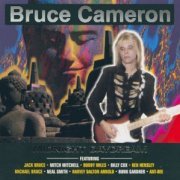
There's not a lot of information about Bruce Cameron on the 'Net; Midnight Daydream was not only his debut album, but also his last, as he sadly took his own life soon after its release. Basically, he was an excellent Hendrix-style guitarist/songwriter, who somehow or other managed to pull together a stellar cast to play on his album, including Jack Bruce (Cream), Mitch Mitchell, Buddy Miles and Billy Cox (Hendrix), Michael Bruce and Neal Smith (Alice Cooper) and Ken Hensley (Uriah Heep). I suspect the album was a project he'd been itching to pull off for years, making it all the more tragic that he killed himself before he could even gauge the public's response.
The material is decent, without being classic, though I suspect the better songs will improve with repeated playing; there's a little inconsistency across the album, no two tracks featuring the same lineup, not to mention five different vocalists, but it's held together by Cameron's playing and songwriting. It's hard to say how well he could've done, given time, but I'm sure he'd have found his niche after a couple of releases. Anyway, as far as the Mellotron's concerned, Cameron played it himself on four tracks, quite obviously real, going by the crankiness of his playing. It's strangely inaudible on the drumless So, Aliens Have Been Here, but there are upfront string parts on Mind Gardens, Just Like A Spaceman, along with Ken Hensley's Hammond and the sitar-led Day After Yesterday, with some excellent tape-speed effects on the latter. Don't let the CD booklet's relentless cheapness put you off buying Midnight Daydream (those photos... that layout...), as it's actually pretty good; I'm sure Cameron would've developed into one of those cult guitarists who bombard us with their instrumental prowess, but better.
 |
Ghost on the Canvas (2011, 42.13) ***/½ |
|
| A Better Place Ghost on the Canvas The Billstown Crossroads A Thousand Lifetimes It's Your Amazing Grace Second Street North In My Arms May 21st, 1969 |
Nothing But the Whole Wide World Wild and Waste Hold on Hope Valley of the Son Any Trouble Strong The Rest is Silence There's No Me... Without You |
|
Current availability:
Mellotron used:
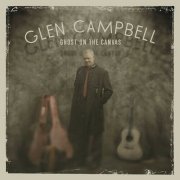
It's easy to rubbish Glen Campbell (1936-2017) for his slick delivery and his on/off MOR moves, but he's one of the relatively few musicians for whom the term 'legend' wholeheartedly applies, whatever you (and I) may think of Rhinestone Cowboy. C'mon, Wichita Lineman! The Beach Boys! Er, his cameo in Any Which Way You Can! 2011's Ghost on the Canvas was his third-to-last album, a decent enough collection of countryish material, possibly at its best on It's Your Amazing Grace, the atmospheric Nothing But The Whole Wide World and six-minute closer There's No Me... Without You, while musical vignettes such as The Billstown Crossroads and Second Street North add unexpected variety to the proceedings.
Only one obvious Mellotron track, from Roger Joseph Manning, Jr., with strings and flutes on There's No Me... Without You, under real strings, although the distant strings on several tracks, buried in the mix, have a vaguely Mellotronic air about them. I shan't try to claim this is for everyone, but it's difficult to knock Campbell's sheer class.
 |
The Circle Game (1968, 37.34) ***/T |
|
| The Iron Road Private Harold Harris The Circle Game The Lady Came From Baltimore The Old Man's Song Wooed and Married North Sea Holes Paddy Lay Back |
Do You Remember? Willie's Gone I'm Not Saying I Think it's Going to Rain Today Doctor Junk On the M.1 |
|
Current availability:
Mellotron used:
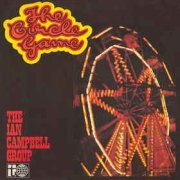
Ian Campbell (father of UB40's Campbell twins) was a major name in the British folk revival of the '60s, chiefly with his Ian Campbell Folk Group. 1968's The Circle Game was credited to the Ian Campbell Group, possibly to indicate the album's lack of folk 'purity' (a big thing in that scene), although, fifty years on, it sounds pretty damn' folky to me. I'll admit that the brass section on opener The Iron Road, On the M.1 and others isn't exactly standard, but the banjos and fiddles are. Highlights include the music hall-ish Private Harold Harris, Joni Mitchell's title track and North Sea Holes, although the album reeks of its era; not so much patchouli and incense as real ale and roll-ups.
An unknown musician plays Mellotron (presumably a studio MkII), with heavily reverbed strings on Randy Newman's I Think it's Going to Rain Today, not to be confused with George Watts' flute, heard on several tracks. Why are they not credited? I suspect many artists of the era used the instrument anonymously to avoid grief with the Musician's Union, particularly when all other players are credited. Anyway, good, but very much of its time.
 |
Ashes of Old Love (1999, 43.46) **½/T |
|
| Makin' Good Time Ashes of Old Love Some People (Can't Walk the Line) Train Not Running I'm Gonna Fly All the Winters We've Known Gone By Now One False Move |
Five Texas Dollars Bidding America Goodbye Rain Just Falls |
|
Current availability:
Mellotron used:
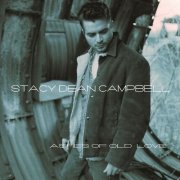
You couldn't really call Stacy Dean Campbell 'Americana' - what he sings is country, pure and simple and yes, it's both. Ashes of Old Love is in the grand Nashville tradition, the music little more than a vehicle for the lyrics. I wouldn't mind, but when said lyrics appear to be threatening violence towards women (One False Move) or do that tedious American patriotism thing (Bidding America Goodbye), I can't help wishing he'd watch something other than Fox News.
Owsley (presumably Will Owsley) plays Mellotron, with a slippery flute line on Bidding America Goodbye, alongside a chordal string part that I'm taking to be real. According to his Wiki page, Campbell 'left the music business' in 2001 (which probably explains his lack of a proper website), making this his last album. Until, of course, he makes a comeback...
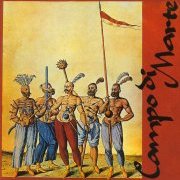 |
Campo di Marte (1973, 40.36) ****/TTPrimo TempoSecondo Tempo Terzo Tempo Quarto Tempo Quinto Tempo Sesto Tempo Settimo Tempo |
Current availability:
Mellotron used:
Another of the many Italian progressive one-offs, Campo di Marte had a heavier sound than some, though not as full-on as, say, the magnificent Museo Rosenbach. With bugger-all Italian, I can't work out whether or not Campo di Marte has a specific concept, although the tracks are (I believe) titled 'First Time' through to 'Seventh Time' and the poem on the back cover has the band's name as its first line, along with lines reading something like 'The indifference, the stupidity, the imbecility', along with a line about agnosticism. So... any Italian speakers out there like to enlighten me?
The music is pretty varied, ranging from quite dissonant, especially the end of Primo Tempo, contrasting sharply with the dreamlike acoustic intro to Secondo Tempo. Two band members are credited with flute, one of them being one of two credited drummers, but I've no idea if they ever used two kits at once. The keyboard player doubles on 'horns', leaving guitarist Enrico Rosa to double on Mellotron. Confused? Anyway, a couple of passages I originally took to be Mellotron flutes I can now hear are real flute duets, but there's a reasonable helping of Mellotron strings on tracks three and five, both well-played, quite evocative parts.
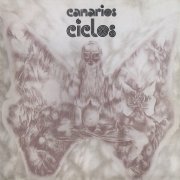 |
Ciclos (1974, 73.31) ****½/TTTT½Paraiso RemotoAbismo Proximo Ciudad Futura El Eslabon Recobrado |
Current availability:
Mellotron used:
Ciclos appears to be the fourth and last album by Spanish quartet Canarios (no 'Los', thank you) and the only one to count as 'progressive'. It's a double-LP adaptation of Vivaldi's Four Seasons and is widely regarded (amongst those who've heard it, of course) as the best classical adaptation ever, knocking ELP, Tomita et al. into the proverbial cocked hat. The band's interpretation is fairly loose, their own compositional work scattered throughout and vocal sections at which Vivaldi would probably have raised a quizzical eyebrow, as indeed he would have at the instrumentation; the standard guitar/keys/bass/drums, with the usual multi-keyboard setup, played most capably by Teddy Bautista. Of course, by tackling a classical piece, the band were at an immediate compositional advantage over their contemporaries, though this isn't to demean them in the slightest; their arrangement skills were exemplary, particularly in the synth department (multi-overdubbed monos, of course), seamlessly merging Vivaldi's work with their own.
I don't know the original work as well as I might, but every now and again a familiar theme rears its head amongst what may or may not be the band's own compositions. There's a sense of humour at work here, too; the closing moments of Ciudad Futura switch from one of those themes to a classic blues ending, sliding into a quick doo-wop section. Bautista's Mellotron work shines throughout the album; while not using it to overkill, he inserts it in all the right places (so to speak), with strings to the fore, while also utilising choirs and flutes, along with a real choir, particularly on Abismo Proximo. Fantastic.
 |
Tiger Flies (2001, 48.51) ***/TT |
|
| Avalanche Talk About Troubles Light Through Stones Hawaiian Police Honey Cactus Jack Burn Low Hangman's Waltz |
Head to Toe in White The Hole The Wreck of The Breeze Medicine Ball This is the Way The Last Days of the War |
|
 |
Nuada (2002, 36.43) ***½/T |
|
| Barrel of Fear Sowing Song Tomorrow's Tomorrow Beautiful Birds Song of the Oss Save Us Circle of Ash Burrowhead |
Rain on the Roof Island 34 Modern Parlance |
|
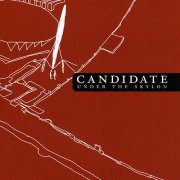 |
Under the Skylon (2004, 41.38) **½/T |
|
| May 4th 1951 Going Outside Garden Moving an Oil Rig Nothing Between Us But Sky Fatal Dose Mountin Snow Falling Leaves |
A Lifetime From Now Another One Down Glass Skylon You Are Loved Lay Me on the Line |
|
Current availability:
Mellotrons used:
I assumed Candidate were going to be yet another British weak-as-water indie-schmindie outfit, so it's come as a most pleasant surprise to discover that they fall into no known category (hoorah!), although influences clearly include UK folk-rock, the Velvets (again) and that catch-all category, film soundtracks (see below).
2001's Tiger Flies is their second album; while my attention wandered in places, their brave mix'n'match approach to instrumentation enhances several otherwise fairly ordinary songs. All three members are credited with Mellotron, with strings on Hawaiian Police, female choir on Cactus Jack, along with what I take to be Mellotron mandolins and guitar and flutes on Hangman's Waltz. The only definite credit is for 'Mellotron choir' from vocalist Joel Morris, with both guitarist Alex Morris and bassist Ian Painter getting simply 'Mellotron'. Given that the non-choir sounds on Cactus Jack are presumably from a MkII, are we actually hearing a real Mellotron here? Well, chaps?
Subtitled 'Music inspired by the film The Wicker Man', the following year's Nuada shows a folkier Candidate than on its predecessor, unsurprisingly, with much of the writing being done in and around the film's locations. The material appears to be better than on Tiger Flies, but that could simply be because I prefer the album's sound and, at only thirty-six minutes, it doesn't get a chance to outstay its welcome. The legendary Bert Jansch guests, too, on Burrowhead, which is a bit of a coup for the band. Although both Painter and Morris (A.) are credited with Mellotron (just flutes in the latter's case), I can only hear said flute part in Tomorrow's Tomorrow, so I've no idea where Painter gets his bit in.
2004's Under the Skylon is named for the impressive structure built on the south bank of the Thames for 1951's Festival of Britain, demolished soon after, allegedly by Winston Churchill's just-elected Conservative government as a snub to the outgoing Labour administration. Wouldn't surprise me a bit. The album's a bit muted, to be honest, veering gently between post-Britpop, powerpop and the band's usual mid-'60s aesthetic, none of it to any great effect, sadly. Just Painter on Mellotron this time, with strings on Another One Down; there may be one or two other sightings, notably the exceedingly distant strings on A Lifetime From Now, but I wouldn't put money on it, frankly.
Exceedingly out of date official site
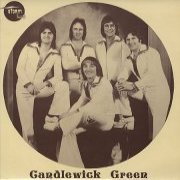 |
Candlewick Green (1977) *½/TTT |
|
| Don't Take Away the Music You Make Me Feel Brand New/ I Can't Give You Anything/ Star on a T.V. Show Love is Blue Feelings December 63 Let's Dance |
Killing Me Softly She Loves You/Yesterday/From Me to You/Please Please Me Who Do You Think You Are Goodbye to Love |
|
Current availability:
Mellotron used:
Good Lord, it's 1977, punk has taken the nation by the scruff of the neck and given it a fucking good kicking and Candlewick Green are still dressing like the Rubettes. Actually, they typify a largely (who said deservedly?) forgotten seam of British light entertainment, which included Bruce Forsyth, It Ain't Half Hot Mum and the completely indefensible Black & White Minstrel Show. I mean, can you believe that a) the BBC still broadcast that stuff in the '70s and b) people watched it? Shocking. In fairness, I can't hold that against the Candlewick boys, but I can blame them for their peculiar brand of low-budget weak-as-water covers of contemporary hits, so I shall. Candlewick Green is really quite disgraceful, bringing grubby workingmen's clubs and racist 'comedians' to mind, although, in fairness, I'm sure they were only trying to make a living like the rest of us. OK, not like the rest of us, because we wouldn't have gone out and played shite versions of already shite songs like You Make Me Feel Brand New and Feelings to bored parents and screaming kids in crummy regional venues called things like the Steel-Grunters and Taplockers Club or suchlike.
Amusingly, the hapless Dudley Jones plays his Mellotron on most tracks, desperately trying to fill in for the absent orchestra, accidentally creating one of the weirdest Mellotron-stuffed albums I've ever heard in the process and that includes the Small Wonder album. You name it, he plays it: fast runs on several tracks, notably Who Do You Think You Are, a front-of-the-mix part on the dreadful Feelings and overdubbed strings and cellos on Yesterday, in a vain attempt to recreate the original. At least he doesn't contribute to the awful backing vocals, buttock-clenchingly out of tune on the unlisted She Loves You at the beginning of their Beatles medley on side two. Maybe that's why it's unlisted. It should be unheard.
But you know what? I've got a sneaking sort of respect for Candlewick Green, in a perverse kind of way. They ploughed their own furrow, ignoring current trends (those clothes were well on the way out in '77), even releasing this album on (their own?) independent, Storm Records (based in Blackpool! Yes!), in true punk style. Maybe. Shockingly, although discographical information is unsurprisingly hard to come by, I've discovered that they released at least two other albums, What Kind of Songs in '74 (seemingly on Decca!) and Making it in 1980. 1980? Do you think they still had the same suits? Let's hope so. Anyway, I suspect this is the only time I've given this particular combination of stars and Ts; I actually toyed with an extra half T, but came to my senses just in time. Of course, should I happen to find anything else by this lot, I may just have to buy it, just on the offchance there's as much Mellotron as here... Or maybe not.
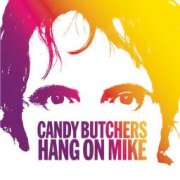 |
Hang on Mike (2010, 41.38) ***/½ |
|
| What to Do With Michael Nice to Know You Unexpected Traffic Kiss Alive II Hang on Mike Painkillers Superkid Not So Bad at All |
Let's Have a Baby Charlie Sparkle! Hunker Down |
|
Current availability:
Chamberlin used:
The Candy Butchers (originally Mike Viola & The Candy Butchers; Viola's also involved with L.E.O.) have a revolving-door musician policy, drummer Todd Foulsham being the nearest they get to a second consistent member. Said drummist's return to the fold was marked by the release of 2004's Hang on Mike, an album with something of a Ben Folds (or is it Billy Joel?) thing going on, although I suspect they'd prefer comparisons to Steely Dan. The material's perfectly good within its genre, with witty, observational lyrics throughout ("I gave you Benny And The Jets, you gave me Kiss Alive II"), although anyone with an aversion to mainstream, piano-driven American pop/rock should probably steer well clear.
Viola plays Chamberlin, with strings on the title track alongside real ones, although all other string parts are either real or synthesized. There's even a liner note saying, "Chamberlin & Rocksichord recorded in LA by David Boucher", in case there was any doubt as to its veracity. Those of a more 'rock' disposition are unlikely to get much from this album, but it's good at what it does, albeit with very little Chamby.
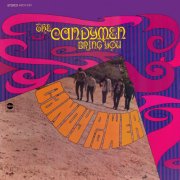 |
The Candymen Bring You Candy Power (1968, 27.22) ***/T |
|
| Ways Great Society Sentimental Lady Crowded Moon Candyman Blues at Midnight The Memphis Blues Again I've Lost My Mind |
Goodbye Mama Bottled Up I'll Never Forget |
|
Current availability:
Chamberlin used:
Alabamans The Candymen apparently began as a mid-'60s rock'n'roll outfit, The Webs, shifting across to a poppier sound after backing Roy Orbison for a while. 1968's The Candymen Bring You Candy Power was their second and last release, veering wildly between styles from faux-Beach Boys opener Ways through the, er, blues of Blues At Midnight, several psych-lite efforts, several more pre-psych things that sound like Orbison outtakes and a Dylan cover, The Memphis Blues Again, played in the style, of, er, Dylan.
Keys man Dean Daughtry plays what has to be Chamberlin on closer I'll Never Forget, with a strident string part, clearly in 'real string section replacement' mode. ...Candy Power is too disparate to find its way onto many (any?) people's 'best of '68' lists, although it has its moments, not least one track of nicely upfront tape-replay.
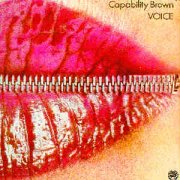 |
Voice (1974, 38.48) ***½/TI am and So Are YouSad am I Midnight Cruiser Keep Death Off the Road (Drive on the Pavement) Circumstances (in Love, Past, Present, Future Meet) |
Current availability:
Mellotron used:
Capability Brown (named after the famous 18th-century British landscape designer, of course) only released two albums, 1972's apparently extremely average From Scratch and Voice, two years later. There's also a compilation, Liar, released after the band's demise which sometimes tends to confuse the issue. Side one of Voice consists of four competent but average typical mid-'70s songs, whose main standout feature is the six-piece band's excellent harmony vocal work (all members sang), with track four being named after a particularly irritating joke t-shirt design of the day, although it features the best instrumental interplay so far.
Side two's Circumstances is where the album suddenly comes alive, with a largely successful attempt to fuse their folk and harmony influences with progressive rock, creating an unusual fusion that stills sounds quite startling even now. Moving through several different (unnamed) parts, the piece is a quite breathtakingly adventurous move by a band not previously known for their invention. Dave Nevin's Mellotron work is a little on the sparse side, but a couple of bursts of highly symphonic strings boost the album's appeal, although I doubt if he plays it for more than a minute in total. Incidentally, the entire band provided backing for Risa Potters' 1972 opus, Take Me Away, including Mellotron on a couple of tracks.
See: Risa Potters
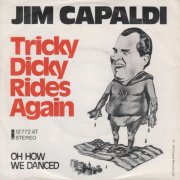 |
7" (1973) ***/T Tricky Dicky Rides Again Oh How We Danced |
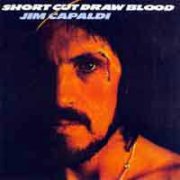 |
Short Cut Draw Blood (1975, 44.06) ***/TGoodbye LoveIt's All Up to You Love Hurts Johnny Too Bad Short Cut Draw Blood Living on a Marble Boy With a Problem Keep on Trying Seagull |
Current availability:
Mellotrons used:
Traffic's singing drummer, Jim Capaldi, released his first solo album, Oh How We Danced, in 1972, following it with a non-album single, the Nixon-baiting Tricky Dicky Rides Again, backed with the album's title track. The 'A' is an upbeat, piano-driven pop/rock effort, brass section to the four, better than you might expect. Someone (Capaldi's Traffic bandmate, Steve Winwood?) plays background Mellotron choirs throughout, surprisingly, although I can't say they add much to the recording.
After '74's appallingly-punning Whale Meat Again, Capaldi released Short Cut Draw Blood the following year. Much like Traffic's later work, these are albums that haven't aged particularly well, finding themselves stuck in the mid-1970s and not in a good way. Soulful, bluesy rock, anyone? It's perfectly good at what it does, in case you think I'm being unfair, but aside from the funky hard rock of the title track and the insightful Boy With A Problem, it all falls a bit flat, a few decades later. Capaldi didn't help himself by tackling so many different styles on the record; while there's nothing wrong with variety, his jaunty take on the Everlys' Love Hurts (a hit at the time) is still horrible, beaten to a pulp by Nazareth's vastly superior version.
Winwood (for definite, this time) played Mellotron on the album's final cut, Seagull, a rather average ballad. His inconsequential string part sounds a lot like regular strings, except where he plays intervals rather than single notes, not especially enhancing either the track or the album. Sadly, Capaldi died in 2005 at the age of sixty, just before a major Traffic reformation, now most unlikely to ever happen.
See: Traffic
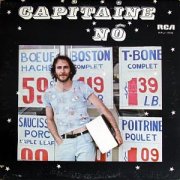 |
Capitaine Nô (1975, 31.29) **½/TYa Rien DrôleMerci Mon Public Maudite Badluck Rien Faire André Baloney Personne Ne M'aime Le Musicien Heavy Raté La Chanson du Brayard |
Current availability:
Mellotron used:
Capitaine Nô was (and is) an eccentric French-Canadian musician/humorist, although, of course, most of his humour's lost on the non-French speaker. Saying that, some of the humour on his debut album, 1975's Capitaine Nô, still manages to cross the language barrier; Merci Mon Public? You sarcastic sod... The music's actually a mix of acoustic, busking-type stuff (with or without full band arrangements) and mainstream mid-'70s blues/rock, which isn't, frankly, the most exciting combination ever, but probably made sense at the time. Best track? Closing blues ballad La Chanson Du Brayard, although it wouldn't rate a mention on a better album.
Christian Simard (from the fab Morse Code) plays Mellotron, with a brief string part on Merci Mon Public and a far more major one on La Chanson Du Brayard, making this rather inessential for either music or Mellotron. There's rumoured Mellotron on the following year's Difficile, but it turns out to be a dud.