





|
|
|
|
||
|
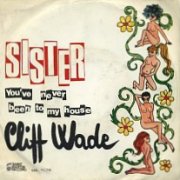 |
7" ( 1969) You've Never Been to My House Sister |
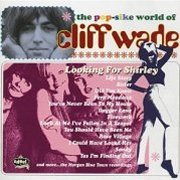 |
Looking for Shirley: The Pop-Sike World of Cliff Wade (2001, recorded 1969, 58.07) ***½/TTT½ |
||
| You've Never Been to My House Shirley Dagger Lane I See I am Free Sister Firework Yes I'm Finding Out Gonna Meet the Man |
Rose Village Empress of Perisand, Wandering Maid Fern Meadows Casting the First Stone I Could Have Loved Her You Should Have Seen Me Life Story Sandy |
November Look at Me I've Fallen Into a Teapot People Get the News Did You Know My Little Chicken |
|
Current availability:
Mellotron used:
Cliff Wade is one of the music industry's peripheral figures, who's nonetheless had a several-decade career writing, recording and producing in the background (Tina Turner was an early recipient, while Pat Benatar's AOR classic Heartbreaker is one of his). He released a single in 1969 on the Morgan Blue Town label, You've Never Been To My House b/w Sister, both tracks groaning with Mellotron, although it sank without trace and he took a backseat in the biz. Thirty-odd years later, those lovely people at Edsel resurrected not just the single, but nearly an hour's-worth of material recorded at the same time, releasing it as Looking for Shirley: The Pop-Sike World of Cliff Wade.
The larger part of its contents consist of the expected 'pop-sike', as it's irritatingly become known in recent years (stand up and take a bow, Record Collector mag, for inventing another retrospective genre; see: freakbeat, sunshine pop), stronger efforts including the Manfred Mann-esque original single, the fabulous Shirley, Sister and Yes I'm Finding Out, although the only track the compilers might have quietly shunted to one side is ridiculous closer My Little Chicken. Other deviations from the main style include the dual acoustic guitars of Empress Of Perisand, Wandering Maid, the proto-hard rock of Casting The First Stone and Did You Know, which opens with a stodgy reinterpretation of Beethoven's Moonlight Sonata, all of which work in their own ways.
The album starts off giving the impression that it's going to be the most Mellotron-heavy effort of the period (from Wade himself?), although most of it's restricted to the set's early tracks, opener You've Never Been To My House opening with what sounds like a choppy brass part, with more of the same on Shirley, strings on Dagger Lane and I See I Am Free, brass and flutes on Sister (alongside a real flute, by the sound of it), strings on Yes I'm Finding Out, a chordal flute part on Gonna Meet The Man, strings on Fern Meadows and low strings on November, while the rest of the set's strings appear to be real. This is a more satisfying overall listen than, for example, Mark Wirtz' similar A Teenage Opera, albeit less well-known, but given the quality of some of the material and the outrageously heavy Mellotron use on nearly half its tracks, if you have any interest in the period whatsoever, buy.
 |
Skillingtryck och Mordballader (2000, 51.28) ***/½ |
|
| Alfredsvisan Will Ni Höra Så Ynkelig en Händelse? Månvisa Älvsborgsvisan En Irländsk Ballad Martyren Värmlandsvisan Jesus Järnväg |
Adolfs Klagan Lasarettsvisan |
|
Current availability:
Mellotron used:
Musician/actor Freddie Wadling (1951-2016) worked his way through several successful Swedish bands while simultaneously running his solo career (from 1989), Skillingtryck och Mordballader being his sixth such release. A dark, mournful affair, it's possibly at its best on Månvisa and closer Lasarettsvisan, although little here is completely expendable.
Soundtrack of Our Lives' Martin Hederos plays a brief Mellotron flute line towards the end of Månvisa, enhancing the gloomy brass used throughout the track.
See: Samples etc.
 |
Distances Between Us (1974, 36.23) ***½/TTDistances Between UsSolstice Mourning Glory Steppenwolf Music of the Spheres |
 |
The Electronic Light Orchestra (1975, 32.38) ***½/TTT |
|
| Timeslip Earthrise Clear Sky Galaxy Anacra Electronic Light Orchestra part 1 Electronic Light Orchestra part 2 Electro Plasm |
Hill and Dale Electro Gavotte Classical Tapestry Changes The Travellers Massage Macromotion Heavens Above |
|
 |
Instincts (1977, 31.32) ***/TWhere Are We Going?Waterbrook High Seas Love Theme Amazon There's Another Summer Coming Machu Picchu Above the Horizon Leaving it All Behind |
Current availability:
Mellotrons used:
I don't actually know an awful lot about Adrian Wagner (1952-2018), other than that he was the great-great-grandson of the better-known Richard and was a British electronic musician who released three albums in the mid to late '70s, of which Distances Between Us is the first and best. The side-long title track is probably the strongest piece, also featuring the most Mellotron, although the vocals were probably a mistake, in retrospect; it would've made a far better instrumental. Distances Between Us is actually a very ambitious composition, with an effective sound effects sequence in the middle and interesting use of various modular and semi-modular synths. The only vocal parts on the album that actually work to any real degree are the contributions made by Hawkwind's poet in residence, Robert Calvert, who manages to imbue his parts with a genuine gravitas. It sounds like him towards the end of the title track, while Steppenwolf appears to be the same lyric he later recorded with Hawkwind on Astounding Sounds, Amazing Music. The Mellotron use is basically confined to the first and last few minutes of the title track (strings with a little choir) and album closer Music Of The Spheres, with some epic strings chords, again with choir mixed in.
The following year's The Electronic Light Orchestra is an oddity in his catalogue, not to mention a rarity on this site: a library LP. You know, an album of (usually) short, instrumental pieces, issued by labels like kpm, designed as background music for film/TV/whatever, rarely made available to the general public. As a result, it bears little relationship to his other releases, although it works fairly well as an electronic album in its own right. Highlights? Opener Timeslip, Classical Tapestry, the synths and frenetic drums of The Travellers and the frantic Macromotion. Plenty of Mellotron: Timeslip is a cello/strings piece, Clear Sky sounds like massed string section, pitchbent choirs all over Galaxy, spooky stings and cellos on Anacra, string section on Hill And Dale and Electro Gavotte, brass on Classical Tapestry and, in a final burst of Mellotronic activity, strings (section?), flutes and choirs on closer Heavens Above. Where can you find this? No idea. Given its brevity, surely sticking it onto a long-overdue reissue of Distances Between Us wouldn't be beyond the wit of someone?
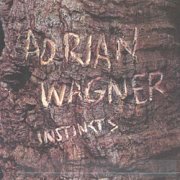
Wagner took a while to get round to his second album 'proper', Instincts, the end result being rather nearer the electronic music mainstream, with a couple of odd 'South American' tracks in Amazon and Machu Picchu, which I don't personally feel work very well. He's insisted there's a lot of Mellotron on the album, but all I can hear are background choirs on There's Another Summer Coming and Leaving It All Behind. There may, or may not be strings on opener Where Are We Going? and a couple of other points during the album, but I really wouldn't care to say either way. His third album, The Last Inca (***) has a similarly 'mainstream' sound, but no Mellotron. Incidentally, there are some hilarious misspellings in the equipment list on Distances...; 'Melatron', 'Clavanette', 'VCS 111' and 'APR', anyone? At least they got 'Farfisa' right... Incidentally, Wagner's M400 was sold to someone who sold it on to IQ's Martin Orford, who eventually sold it on to Pendragon and Arena's Clive Nolan. Mellotron trivia? We goddit.
See: Judy Dyble
 |
Heart of the Journey (1993, 43.49) *½/½ |
|
| Heart of the Journey Something Wonderful String of Pearls Just Believe I'll Give All I Have Come By Here Vision of Wholeness Do You Know His Heart |
Morning Star My Redeemer Lives |
|
Current availability:
Mellotron used:
Cleveland, OH's Michele Wagner is your typical CCM artist, active since the late '80s, 1993's Heart of the Journey being her third album, according to Discogs, if not her website. Now, what do you think it might sound like? Black metal? Gangsta rap? Ambient electronica? All the above, all at once? Just kidding - it is, of course, an insipid album of religious soft rock/MOR, at its least offensive on the lengthy guitar solo on String Of Pearls, largely because a) someone's playing guitar reasonably well and b) Wagner isn't singing.
Phil Madeira plays what I presume is his own M400 on the album, with occasional strings under that guitar solo on String Of Pearls, although other string parts sound more like generic samples. Anyway, who cares? This is utterly awful. You don't want to hear it, I don't want to hear it again. Avoid.
 |
Strange Weirdos: Music From & Inspired By the Film Knocked Up (2007, 48.08) ***/½ |
|
| Grey in L.A. You Can't Fail Me Now Daughter Ypsilanti So Much to Do Valley Morning X or Y Final Frontier |
Feel So Good Lullaby Naomi Doin' the Math Strange Weirdos Passion Play |
|
 |
Recovery (2008, 47.56) ***½/½ |
|
| Black Uncle Remus Saw Your Name in the Paper School Days The Drinking Song Motel Blues Muse Blues New Paint Be Careful There's a Baby in the House |
Needless to Say Movie Are a Mother to Me Say That You Love Me Old Friend Man Who Couldn't Cry |
|
Current availability:
Chamberlins used:
I don't know why I've always assumed Loudon Wainwright III was Canadian; probably because of his one-time marriage with noted Canuck Kate McGarrigle. Anyway, he isn't; he was born in North Carolina and his famous children (Martha and Rufus) have dual citizenship. He began writing songs in the late '60s, releasing his first, eponymous album in 1970, 2007's Strange Weirdos: Music From & Inspired By the Film Knocked Up being his 18th studio effort. Although it's a soundtrack album, as its publicity states, it stands up in its own right and includes several new songs which seem to be quintessentially Wainwright. Whether or not you think that's a good thing will depend chiefly on whether you like anything else he's done, I suspect. Not blown away by it myself, but maybe you have to get into what he does. Anyway, the ubiquitous Patrick Warren plays Chamberlin, with distant, ghostly flutes on Valley Morning that don't especially add anything to the track; it may be elsewhere on the album, but it's the master of musical camouflage, so who knows?
The following year's Recovery is a more cohesive effort, with songs that, at least to my ears, sound better-crafted. Turns out that's 'cos they're new recordings of songs from his first few albums, thus the title. It's occurred to me (duh) that it's all about the lyrics, as with so many singer-songwriters, Wainwright's schtick being that they're mostly humorous, so if you're not prepared to listen to what he's singing, forget it. Best lyric? Closer Man Who Couldn't Cry, no contest. I know I've heard this recently and I know I've never heard any Wainwright album containing it and a quick 'Net search tells me it's on Johnny Cash's first Rick Rubin album, American Recordings, proving that Rubin only picked top-notch material for Cash to tackle. Anyway, Warren's back on Chamby and while there are several tracks that might have it in the background, the only definite use is an almost discordant string part on Muse Blues, so that's another low T rating for Mr. W, I'm afraid.
So; do you think humour belongs in music? If so and you can bear his on/off countryisms, you may well goes for Rufus and Martha's dear old dad. OK, Martha wrote a song for him called Bloody Mother Fucking Asshole, but she's also collaborated with him. Parents, eh? Dad also wrote a song for Rufus when he was a baby, Rufus Is A Tit Man. Oh no he isn't... Very little Chamberlin on these albums, though, so don't go buying them for that.
 |
Martha Wainwright (2005, 48.51) ***½/T |
|
| Far Away G.P.T. Factory These Flowers Ball & Chain Don't Forget This Life When the Day is Short |
Bloody Mother Fucking Asshole TV Show The Maker Who Was I Kidding? Whither Must I Wander |
|
Current availability:
Mellotron used:
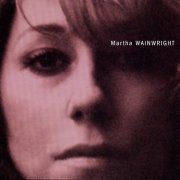
What must it be like to know that your children hate you? Ask Loudon Wainwright III: his son Rufus hasn't exactly lauded his father to the skies, while his daughter Martha wrote a song about him called Bloody Mother Fucking Asshole, originally released as the title track of her 2004 EP of the same name. Ignoring a 1997 cassette-only release, 2005's Martha Wainwright is her debut full-lengther, a decent singer-songwriter effort, possibly at its best on These Flowers, Don't Forget, the superb Bloody Mother Fucking Asshole itself and closer Whither Must I Wander.
Without actually saying so, Paul Bryan clearly plays Mellotron on all three tracks on which he's credited with 'keyboards', with background strings on Ball & Chain, occasional chordal flutes on When The Day Is Short and more upfront strings on TV Show, plus what sounds like sampled strings and flutes from Brad Albetta on Factory. I'm not sure what I expected of this album, but it's (mostly) less angry than That Song would lead you to expect. Recommended.
See: Paul Bryan
 |
Rufus Wainwright (1998, 53.21) ***/½ |
|
| Foolish Love Danny Boy April Fools In My Arms Millbrook Baby Beauty Mark Barcelona |
Matinee Idol Damned Ladies Sally Ann Imaginary Love |
|
Current availability:
Chamberlins used:
Rufus 'son of Loudon' Wainwright (not to mention his mother, Kate McGarrigle, his aunt, Anna or his sister, Martha) seems to have single-handedly revived the art of the torch singer, with his uncompromisingly gay approach to his art (the sleeve of his recent Want Two pretty much redefines the term 'camp'). I'll be completely honest here and say that his music does very little for me at all, although the only word I can find to describe his voice is 'gorgeous', despite its being fairly conventionally male. As a result, I'm not even going to attempt to review the music here; plenty of online reviewers have already done a good job of doing so, so I'll leave it up to them.
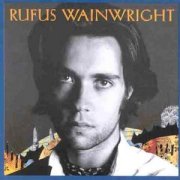
His debut, 1998's Rufus Wainwright, has considerable orchestral input; in fact, it could be described as 'overblown' - I believe Wainwright himself wasn't that impressed by its OTT production. As a result, it's difficult to work out exactly where Jon Brion's Chamberlin has been used, though it sounds like Chamby flutes on April Fools and there's some sort of loop at the end of Danny Boy (not that one, thankfully) that could be Chamby, although it could just as easily be a sampler.
See: Samples etc.
 |
The Waiting (1997, 44.54) **½/T |
|
| Never Dim How Do You Do That? Put the Blame on Me It is Enough My Pride Hands in the Air Number 9 Better Off as Friends |
Heaven is Home No Time for That Indian Summer Beautiful Blood |
|
Current availability:
Mellotron used:
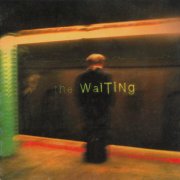
The Waiting are a Christian outfit of the 'more palatable' variety, the breezy pop/rock of their second, eponymous album beating most CCM hands-down, better tracks including Put The Blame On Me and the rocky Number 9. Unfortunately, the album's limited appeal wears thin as it progresses, despite its reasonable length, but I've heard vastly worse in this strange, lyrical subject matter-driven genre.
Mellotron player to the CCM community, Phil Madeira, adds flutes and a string line to closer Beautiful Blood, although the strings on It Is Enough are real, making this somewhat not worth it on the Mellotron front. So; almost-listenable CCM. What will they think of next?
Tom Waits (US) see: |
 |
Rick Wakeman (UK) see: |
 |
 |
Isn't it Pretty to Think So? (2003, 39.13) **½/T |
|
| Gum Two Window Phoebe Where Do We Go? Possessions Why Then? Without Passion |
A Single Autumn Day Not a World Untouched |
|
Current availability:
 |
Mellotron used:
Named for the Robert Lowell poem, Waking in the Blue were, principally, Michelle (vocals) and Brian (guitars, other stuff) Coombes, Brian being ex-New England neo-proggers Tristan Park, who have subsequently reformed. I don't know if the duo's sole album, 2003's Isn't it Pretty to Think So?, could be considered a logical progression (ho ho) from his previous band, but its breezy pop/rock features elements of that '90s neo-prog sound; you know, occasional riffy guitars, digital synth pads and unnecessary bass pedal use, more obvious examples including Phoebe, Without Passion and bass pedal-driven closer Not A World Untouched.
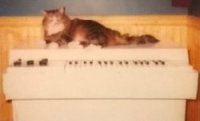
Brian plays Mellotron (right, with studio cat) on three tracks, with background chordal choirs on Window and Where Do We Go? (credits title: Where Do We Go From Here?) and, er, background chordal strings on Without Passion, all a) somewhat murky and b) somewhat gratuitous, to be blunt. Sorry, but despite guests of the calibre of Chris Difford (Squeeze) and Ian McDonald (you need to know?), this failed to retain this listener's interest, its minimal Mellotron use doing little to improve matters.
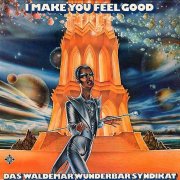 |
I Make You Feel Good (1976, 35.37) **½/½ |
|
| Peter Gunn White Cliffs of California King Kong and His Love Affairs Svenska Flicka All She Left Was the Old Procol-Harum-Record Kriminal Tango Exodus Gretna Green Divorce Jive (Aufgerollter Schotten-Rock) |
Scarborough Man, That Was Not Fair See You at the Rum-Bar |
|
Current availability:
Mellotron used:
Das Waldemar Wunderbar Syndikat? Their lone LP, 1976's I Make You Feel Good (nothing like a bit of confidence, eh?) is a bizarre, effectively instrumental effort that refuses to take itself too seriously. Several of its tracks sound at least vaguely familiar (aside from opener Peter Gunn, which IS actually Peter Gunn), not least Exodus' classic Western theme sound (Morricone?) and Scarborough Man, That Was Not Fair's slight resemblance to an old English folk tune, just not the obvious one, while Kriminal Tango features a raft of ridiculous cops'n'robbers-style sound FX and King Kong And His Love Affairs is funky in a German kind of way. Highlights? All She Left Was The Old Procol-Harum-Record and Exodus.
Udo Lindenberg, who's had a long and successful, if German-centric career, plays occasional Mellotron, with background choirs on Svenska Flicka and Scarborough Man, That Was Not Fair. Hardly a defining feature of an album that, I'd imagine, struggled to find an audience over forty years ago. I doubt if anything much has changed. Incidentally, Discogs has an entry for the titular Herr Wunderbar, which strikes me as highly unlikely, so I'm filing this under 'Waldemar'.
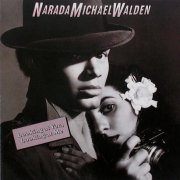 |
Looking at You, Looking at Me (1983, 42.32) **½/½Reach Out (I'll Be There)Looking at You, Looking at Me Burning Up Never Wanna Be Without Your Love Shake it Off Dream Maker Tina Ain't Nobody Ever Loved You Black Boy |
Current availability:
Mellotron used:
Narada Michael Walden, in the manner of Devadip Carlos Santana or Mahavishnu John McLaughlin (with whom Walden drummed), took on a 'guru' name in the early '70s; unlike them, he seems to've kept it. 1983's Looking at You, Looking at Me was his seventh solo album, seeing him singing, writing, producing, drumming and playing some keys on a fairly mainstream soul effort, at its probable best on Shake It Off's kind-of interesting synth/slap bass combo and the Latin-esque Ain't Nobody Ever Loved You and its worst on its opener, where he takes The Four Tops' deathless Reach Out (I'll Be There) and changes some of those beautiful chords. Ruined.
Surprisingly, Mark Robertson plays Mellotron on closer Black Boy, with a background choir part that adds little to the track. I'd imagine Walden's held in high esteem in the R&B world; I can't fault his talents, but I can fault this album.
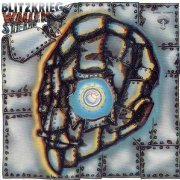 |
Blitzkrieg (1971, 43.22) ****/TTTLuneticThe Theme Manhattan Project Audiences |
 |
Mother Universe (1972, 40.32) ***½/TTMother UniverseBraintrain Shakespearesque Dedicated to Mystery Land Relics of Past Golden Antenna |
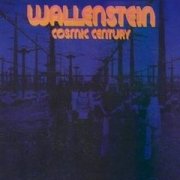 |
Cosmic Century (1973, 42.45) ***½/TTRory BlanchfordGrand Piano Silver Arms The Marvellous Child Song of Wire The Cosmic Couriers Meet South Philly Willy |
 |
Stories, Songs & Symphonies (1975, 37.46) ***/TThe PriestessStories, Songs & Symphonies The Banner Your Lunar Friends Sympathy for Bela Bartok |
Current availability:
Mellotrons used:
Wallenstein are one of those German progressive bands, along with Grobschnitt and Novalis, who always find themselves lumped in with the 'Krautrock' scene, next to Ash Ra Tempel, Amon Düül 2 et al., while not actually being anything of the sort. They were, in fact, a fairly typical prog band of the era, moving from their more guitar-heavy early material to a more symphonic keyboard-led style later on, before sliding into mediocrity in typical late-'70s fashion.
Blitzkrieg is a very early 'regular' prog album by German standards, although thinking about it, it's actually as much 'post-psych' as anything, with a fairly primitive sound. Keyboard player/main man Jürgen Dollase already knew the direction he was heading in, I suspect and the end result is intense but tuneful, with some fiery playing from all concerned. Opener Lunetic (they had an American in the band at the time - couldn't he have told them how to spell it?) is probably the album's highlight, but there isn't a bad track to be heard, with reasonable Mellotron flutes and strings on all but the first track.
I believe the venerable elderly lady on the sleeve of Mother Universe was Dollase's grandmother - the rear sleeve shows the back of her head, hair in a bun. The title track opens the album in full-on symphonic style, Mellotron strings to the fore, although the band take a sharp left turn on the rocking Braintrain. The rest of the album veers between the heavier and more symphonic ends of the band's style, with some less obvious Mellotron on Shakespearesque and an almost inaudible part on Dedicated To Mystery Land. Best track? Definitely Mother Universe itself.
Cosmic Century features a violinist, Joachim Reiser, along with the band's regular guitar/bass/keys/drums lineup. The material is rather more 'mainstream' than before, in a mid-'70s kind of way, of course, with no particular album highlights, although none of the tracks are actually bad. Dollase plays Mellotron on five out of six tracks, but it's fairly minimal, with the choirs and cellos on Song Of Wire being the most overt use. Be warned, though - some tracks feature no more than a few seconds of Mellotron, noticeably The Cosmic Couriers Meet South Philly Willy, which has a few flute notes on the fadeout.
By Stories, Songs & Symphonies, the band were describing themselves as 'The Symphonic Rock Orchestra Wallenstein', a bit of a misnomer, given that they still sounded like prog-ish mid-'70s rock on several tracks. The lengthy Your Lunar Friends is probably the album's best piece (Dollase's vocals aside), although the only Mellotron is some thin-sounding strings on the title track, so, better music than Mellotron, though not that great on either front, really.
So; a classic case of a band getting worse as they went along, to be honest. Blitzkrieg might not be their most 'symphonic' effort, but it's certainly the most energetic and has the best Mellotron use. For fans of the German Sound, though, all these albums are probably worth the effort, though they did get a bit up themselves on the later ones. Like most of their contemporaries, Wallenstein 'went commercial' in the late '70s; their fifth effort, No More Love (**) is awful and I'm sure later albums are even worse. Avoid.
See: Jerry Berkers | Cosmic Jokers | Sergius Golowin | Walter Wegmüller | Witthüser & Westrupp
 |
The Origin of Adjustable Things (2015, 48.50) ****/½ |
|
| This is How You Make Me Feel Satin Grey Satellite Song to a Siren Creep Time Doesn't Play Fair Anonymous Journeys Brighton Beach |
The Origin of Adjustable Things Wild is the Wind Rational Thought Never Let Me Go |
|
Current availability:
Mellotron used:
Why is it so difficult to compare quirky, artistic, piano-playing female musicians to anyone other than Kate Bush? I suppose she broke out of the mould of rather vanilla, Carole King-style 'confessional' singer-songwriters, although I'm sure she was far from the first to do so, but as soon as anyone even vaguely similar comes along (Tori Amos, anyone?), out come the comparisons. I do my level best not to get caught in the same trap, but, although displaced Londoner Joanna Wallfisch (now based in NYC) doesn't sing like Our Kate, her writing is comparable, as is her sense of musical adventure on her second release, 2015's The Origin of Adjustable Things. It's actually Wallfisch's collaborator, Dan Tepfer, who plays the bulk of the album's piano, alongside other keyboard contributions. Most of the material is hers, though, highlights including oddball opener This Is How You Make Me Feel, with its wordless, percussive vocal interjections, Satellite, Brighton Beach (Wallfisch on piano) and the title track. The album's four covers all get the Wallfisch treatment, probably at its most extreme on Radiohead's Creep, deconstructed to the point of unrecognisability, although the overall effect is of a cohesive, meticulously-planned record that, if there's any justice whatsoever, should catapult Wallfisch up to 'household name' status.
Tepfer plays background Mellotron string and flute parts on Satellite, arranged with a subtlety way beyond the talents of (dare I say?) most artists, although I don't know if Tepfer or Wallfisch is responsible. So; very good indeed. Make the effort to hear this record.
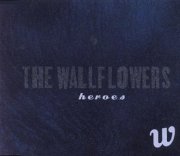 |
7" (1998) ***/T Heroes Invisible City |
 |
(Breach) (2000, 42.51) ***½/T |
|
| Letters From the Wasteland Hand Me Down Sleepwalker I've Been Delivered Witness Some Flowers Bloom Dead Mourning Train Up From Under |
Murder 101 Birdcage Babybird |
|
Current availability:
Chamberlins used:
Jakob Dylan's Wallflowers are one of those bands that I've been expecting to turn up here for years, so it comes as a surprise to find that their only credited tape-replay use is over ten years old and I've already inadvertently reviewed it. Their version of Bowie's iconic Heroes was used in 1998's godawful Godzilla remake, a pretty faithful take on the track, with little of the band's usual Americana feel, although the flip, Invisible City, (from their previous album, '96's Bringing Down the Horse) is more typical. Patrick Warren plays Chamberlin strings on Heroes, with a part that would have worked well on the original track, although its actual Chamby use is different.
I said I'd been expecting The Wallflowers to turn up here for years? I mean, how could this band NOT have used a Chamberlin at some point? 2000's (Breach) is that album, completely fulfilling their promise as a singer/songwriter/Americana cross, highlights including opener Letters From The Wasteland, Sleepwalker, the superb Witness, buoyed up by Mitchell Froom's horn arrangement and Mourning Train, among others. Of several possible suspects, it seems likely that it's Jon Brion on Chamberlin, with plinky Chamby guitar on Letters From The Wasteland, a brief burst of flutes on Sleepwalker and flutes on I've Been Delivered, although all vibes parts were played by band member Rami Jaffee. Having only previously heard the popular-yet-lacklustre Bringing Down the Horse, this comes as a nice surprise; low on the tape-replay front, but a great album.
See: Godzilla OST
 |
Wally (1974, 41.30) ***/TThe MartyrI Just Wanna Be a Cowboy What to Do Sunday Walking Lady To the Urban Man Your Own Way |
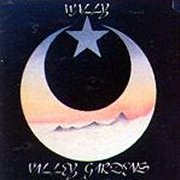 |
Valley Gardens (1975, 40.00) ***/TValley GardensNez Percé The Mood I'm in The Reason Why Nolan The Charge Disillusion |
Current availability:
Mellotrons used:
Wally suffered the rather dubious distinction of being championed by The Old Grey Whistle Test's 'Whispering' Bob Harris, these days known best for being a country music DJ (he sneered at the New York Dolls when they appeared on the Whistle Test, so he was hardly going to go for anything too energetic, was he?). In fact, Wally was produced by Harris and Rick Wakeman, which doesn't exactly inspire much confidence. While the band fitted (very) broadly into the 'progressive' category, there was more than a hint of country/rock about them, especially with Paul Middleton's steel guitar; West Coast Prog, anyone? Actually, Wally isn't that bad, just rather forgettable, with a regrettable lack of energy. Paul Gerrett plays Mellotron on one track only, the twelve-minute To The Urban Man, with a string part drifting in and out of the song. Pete Sage's electric violin confuses the issue in places, but it's definitely only the one Mellotron track.
Second (and last) album, Valley Gardens, carries on in a similar vein to their debut, including a side-long track, The Reason Why, probably the best thing the band recorded. Gerrett was replaced by Nick Glennie-Smith, who gets marginally more Mellotron in this time round, with strings on the title track and the first part of The Reason Why, Nolan, but it's all pretty minor, to be honest. So; so-so albums, minimal Mellotron. Not that exciting, really, although I've heard an awful lot worse. I believe that's called 'damning with faint praise'. Oh well.
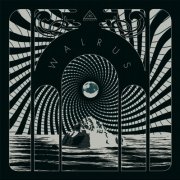 |
Walrus (2013, 33.30) ***½/TTTromsø IIISignals Spitsbergen Static |
Current availability:
Mellotron used:
Despite containing several Swedish members (not least Mattias "Änglagård" Olsson), Walrus, a new psych/space rock conglomeration including Matti Bye, identify as Norwegian. I can't describe their brief, eponymous 2013 debut any better than, er, 'psych/space rock', opener Tromsø III covering the 'manic, Hawkwind end of the spectrum' with aplomb, while the more reflective, violin-fuelled Signals (at least until half way through) relaxes back into the psychedelic sofa, (presumably) accidentally sounding quite like early Porcupine Tree in the process. Overall, the album features more of The Quiet Stuff than The Loud Stuff, but I can't imagine anything here is likely to bore those of a more psychonautical nature.
The album opens with Bye's choppy messing about on a Mellotron (strings and cellos, for what it's worth, with MkII 'moving strings' at the end of the track), with boys' choir and screechy strings on Spitsbergen, although I don't think the high, female voices on Signals are tape-generated. Go on, tell me I'm wrong. A fine modern psych album, then, that should also appeal to many progressive fans for its adventurous musical structures, not to mention a reasonable helping of Mellotron.
See: Matti Bye