




|
|
|
|
||
|
|
Amen Corner America American Gypsy American Music Club |
American Tears Amon Düül II Tori Amos Ampera |
Merrie Amsterburg Amsterdam The Analogues |
Al Anderson Carleen Anderson Jon Anderson |
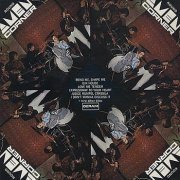 |
Round Amen Corner (1968, 38.35/50.11) ***/T |
|
| Bend Me, Shape Me Judge Rumpel Crassila Love Me Tender Our Love (is in the Pocket) Something You Got I am an Angel Expressway to Your Heart Good Time Let the Good Times Roll - Feel So Good |
Can't Get Used to Losing You Lost and Found Gin House Blues Nema I Know Satisnek the Job's Worth The World of Broken Hearts I Don't Want to Discuss it - Amen |
|
Current availability:
Mellotron used:
Amen Corner, from Cardiff, are known for launching Andy Fairweather Low's career, although the band also spawned organist Derek "Blue" Weaver (Strawbs, Bee Gees) and a couple of members of the short-lived Judas Jump. Coming from a dancehall background (unusually for a pop act, they had a brass section), it should come as no surprise that their debut, 1968's Round Amen Corner, is full of spirited soul and R & B numbers, alongside pop (opener and major hit Bend Me, Shape Me), ballads (an iffy version of Love Me Tender) and, er, novelty calypso (Judge Rumpel Crassila). Their first hit, Gin House Blues, is probably the best thing here, at least from the original album, although one of the CD's bonus tracks (italicised above), Nema, isn't bad either.
Weaver doubled on Mellotron on a few tracks (thanks for that, Blue), with strings on Love Me Tender and sustained string notes and something else (flutes?) played rather oddly on I Am An Angel, although that would appear to be it. While not exactly essential, the expanded Round Amen Corner's a good listen for those interested in late '60s British rock and pop, who may've dismissed the band as too lightweight, although its relatively low Mellotron usage makes it not especially worthwhile on that front.
Official 'New Amen Corner' site
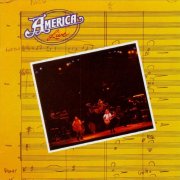 |
Live (1977, 46.23) **½/T |
|
| Tin Man Muskrat Love I Need You Old Man Took Daisy Jane Company Hollywood Sergeant Darkness |
Amber Cascades To Each His Own Another Try Ventura Highway Sister Golden Hair A Horse With No Name |
|
Current availability:
Mellotron used:
There can't be many people of a certain age in the Western world who haven't heard America's A Horse With No Name; CSN-lite, but, in fairness, an evocative song that's stood the test of time. Try to find someone outside their home country who knows anything else by them and you could be on a hiding to nothing, though, probably because, going by the contents of their 1977 live album, er, Live, it's their most appealing song. It's not that the rest of their oeuvre is actually bad, just terribly, borderline-MOR bland, major US hits such as Muskrat Love, Tin Man and Ventura Highway leaving next to no impression.
The trio had just become a duo when the album was recorded, Dan Peek having left for pastures new, leaving songwriters Gerry Beckley and Dewey Bunnell (there, bet you didn't even know their names) to tackle the group's three-part harmonies as well as they could. Unfortunately (and probably because of the live recording), they chose to do a big production number, rather pointlessly getting the whole thing produced by their regular producer, the even-then legendary George Martin. Some of the material survives the treatment (they actually play several songs just as a duo), but The Hit is mangled by the addition of not only strings, but brass and extraneous backing vocals. Horrible.
Although the strings on a couple of tracks are real, we're definitely hearing a Mellotron on Sergeant Darkness and Amber Cascades; given that they were one man down, it's almost certainly played by sax/extra keys man Jimmy Calire, to reasonable effect. But why use a Mellotron when you have real strings? Alternatively, why use real strings when you have a Mellotron? Mystifying. Anyway, America fans probably have this already and the rest of you don't need it; if you want to hear the original A Horse With No Name, find it on YouTube.
 |
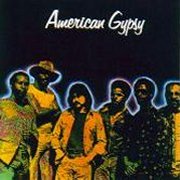 |
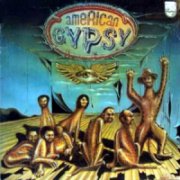
Angel Eyes [a.k.a. American Gypsy] (1974, 39.27) ***½/0 |
|
| Inside Out 10,000 Miles Ooh Why Not Golden Ring Lady Eleanor Angel Eyes While it's Cold Outside Stuck on You |
Let Your Life Lead By Love Tribute to American Gypsy |
||
Current availability:
Mellotron used:
The multi-racial American Gypsy appear to have been a US band based in the Netherlands, for some reason. Their stock-in-trade was soul/funk and, to my untrained ear, they seem to do it pretty well, although I'd be the first to admit that this really doesn't float my boat that much. What may possibly be their debut, despite having been together for over a decade, 1974's Angel Eyes, was reissued the following year as American Gypsy. Opening with an orchestral flourish, the album features quite unusual songwriting for the genre, with most un-dancelike changes in tempo and some interesting guitar work; maybe I'm just judging it by modern standards, not the more 'progressive' ones of the day. Their cover of Lindisfarne's Lady Eleanor is particularly interesting, showing what can be done with source material from another genre, while the African percussion on Angel Eyes combines surprisingly well with the period string arrangement. Most interesting of all, however, is Tribute To American Gypsy, with a synth part and chord changes straight out of contemporaneous Genesis, to the point where I'd put money on American Gypsy using the same synth, an ARP Pro-Soloist.
However... bassist Joe Skeete's credited Mellotron use is basically inaudible. There are several parts scattered throughout the album which may be Mellotronic, especially in Tribute To American Gypsy, but with a regular orchestra and brass section in attendance, it's almost impossible to tell. So; if mid-'70s soul is your bag, this is a good album, with more 'oomph' (and invention) than much of the period's music, although if you're after an unusual Mellotron experience, or indeed, any at all, forget it.
 |
Mercury (1993, 49.43) ****/TT |
|
| Gratitude Walks If I Had a Hammer Challenger I've Been a Mess Hollywood 4-5-92 What Godzilla Said to God When His Name Wasn't Found in the Book of Life Keep Me Around |
Dallas, Airports, Bodybags Apology for an Accident Over and Done Johnny Mathis' Feet The Hopes and Dreams of Heaven's 10,000 Whores More Hopes and Dreams Will You Find Me? |
|
 |
Love Songs for Patriots (2004, 61.09) ****/T½ |
|
| Ladies and Gentlemen Another Morning Patriot's Heart Love is Job to Do Only Love Can Set You Free Mantovani the Mind Reader Home |
Myopic Books America Loves the Minstrel Show The Horseshoe Wreath in Bloom Song of the Rats Leaving the Sinking Ship The Devil Needs You |
|
Current availability:
Mellotrons/Chamberlins used:
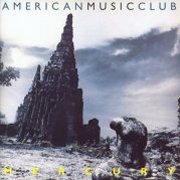
American Music Club's sixth release, 1993's Mercury, is one of those albums that crops up every now and again, when a meddling record company tries to find out why the goose lays the golden eggs; they don't say "If it ain't broke, don't fix it" for nothing and, at least to an extent, this album proves it. Virgin decided to bring in über-producer Mitchell Froom, of recent Crowded House production fame, in the mistaken belief that getting in a 'name' would make superstars of their reluctant signings. What actually happened was that Froom grossly over-produced the record, making a nightmare of the procedure for all involved, not least main man Mark Eitzel. It has to be said that, as someone new to them, it doesn't actually sound that bad, but I'm told that most of their subtlety is lost, to the point where it barely sounds like the same band.
One thing is certain, though; without Froom's involvement, I wouldn't be reviewing this at all. His fascination with the Chamberlin was at its peak in the early '90s, although as is so often the case with the instrument (as against the Mellotron), it's difficult to spot when it's being used here, so apologies for any mistakes in the above listing. I think I can hear flutes on I've Been A Mess, but the strings on Johnny Mathis' Feet and Will You Find Me? are quite overt, making me wonder why I couldn't identify them on my initial hearing, a few years ago. So; fans will tell you the songs are great, but the album sounds awful. I find it quite difficult to comment, as I found it a good listen, with a couple of nice Chamby tracks, but that's rather irrelevant to the album's actual quality, of course.
After a final album for Virgin, '94's San Francisco, American Music Club split up, only reforming in 2003, releasing Love Songs for Patriots the following year. Highlights include the wonderfully sardonic Patriot's Heart, mournful acoustic ballad Song Of The Rats Leaving The Sinking Ship and epic closer The Devil Needs You, but there isn't a bad track here, to be honest. One notable musical change in the intervening decade has been the rise in popularity of tape-replay instruments again, so it's not entirely surprising that Marc Capelle plays (real?) Mellotron and Chamberlin on the album, not to mention both Optigan and Orchestron, although there's surprisingly little (obvious) tape-replay on show. Quite a major (Mellotron?) string part on Patriot's Heart, with a more background one on Home, but unless the rhythms on Mantovani The Mind Reader are Chamby (I suspect one of the optical devices myself), that would appear to be it.
See: Mark Eitzel
 |
Branded Bad (1974, 45.27) ***½/T |
|
| Sweet Changes Doctor Abreaction Low Down, Need You Badly Crooked is Quicker Pauline Lock and Chain Take Me Lord Louie (I've Been Arrested) |
Pennywall Slidin' Home |
|
 |
Tear Gas (1975, 40.37) ****/TTT½Back Like MePart 1 Part 2 Charon Serious Blue Boy (Sail on) Tear Gas I Saw a Soldier The War Lover Franki and the Midget |
Current availability:
Mellotrons used:
Isn't it funny how the same names keep cropping up time and time again? Keyboard player/vocalist Mark Mangold is familiar to me from Touch (not the '60s outfit), his very late-'70s AOR band who, like New England, were probably actually too good for mass acceptance and after their demise, he formed Drive, She Said, who still appear to be around in one form or another. It appears that his first 'pro' band were American Tears, a guitarless pomp trio who made three 'cult' albums in the mid-'70s, eventually metamorphosing into Touch after the addition of guitarist Craig Brooks for their third album, Powerhouse (***).
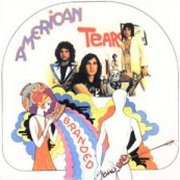
Their debut, Branded Bad, is quite an odd album, with its keyboard-led guitar-free material, treading a fine line between (sort of) hard rock and proto-AOR. The material isn't bad, but few of the tracks really leap out at you, to be honest. There's very little audible Mellotron on the album, despite all Mangold's keyboard work, although it's possible that there's some buried in the mix on a couple of tracks. Anyway, all I can hear is a distant blend of M400 strings and brass at the beginning of Lock And Chain and some upfront strings at the end of Pennywall.
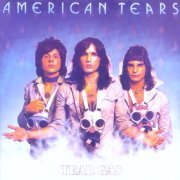
They followed up a year later with Tear Gas, really hitting musical paydirt with a full-on seven-track pomp release. Of side one's three tracks, the two-part Back Like Me and Serious Blue Boy (Sail On) both top the seven-minute mark, while the rest of the album keeps up the pop-prog pressure admirably. After a relatively slow start, Mangold sticks Mellotron onto almost every track this time round, sometimes using a strings/Hammond combination that occasionally deceives the ear, although there's some standout string use on I Saw A Soldier, in particular. All in all, a massive improvement, making the sheer averageness of their last album all the more disappointing. Incidentally, the bonus tracks on the CD sound like they're by a different band and both have guitar on them. Ignore.
 |
Vive la Trance (1973, 44.51) ***½/½ |
|
| A Morning Excuse Fly United Jalousie Im Krater Blühn Wieder die Bäume Mozambique Apocalyptic Bore Dr. Trap |
Pig Man Manana Ladies Mimikry |
|
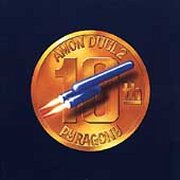 |
Pyragony X (1976, 38.29) ***/TTFlower of the OrientMerlin Crystal Hexagram Lost in Space Sally the Seducer Telly Vision The Only Thing Cappucino |
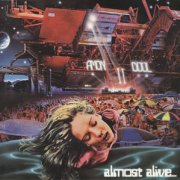 |
Almost Alive... (1977, 45.31) ***/T½One Blue MorningGood Bye My Love Ain't Today Tomorrow's Yesterday Hallelujah Feeling Uneasy Live in Jericho |
Current availability:
Mellotrons used:
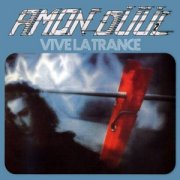
1973's Vive la Trance was Amon Düül II's sixth studio album (ignoring Utopia), seeing the first fruits of their efforts to move away from their full-on 'kraut' past. Highlights include reflective instrumental Im Krater Blühn Wieder Die Bäume, Mozambique's jammed-out grooves and closer Ladies Mimikry, although I shan't be returning to opener A Morning Excuse any time soon, I suspect. Multi-instrumentalist Chris Karrer plays the Mellotron flute line on Manana [sic]; far from essential, but good to hear.
Four albums and three years on, Pyragony is also known as Pyragony X; with a large '10th' on the sleeve, but no 'X', you could quite feasibly leave the Roman numeral off the title, I suspect. They'd come a long way since their groundbreaking classic 'kraut' albums of the late '60s/early '70s, but not in a direction now considered fashionable, having become a lightweight prog band with boogie tendencies (yes, I'm afraid so). The album opens well enough with the eastern-flavoured Flower Of The Orient, but quickly descends into rock'n'roll hell with, surprisingly, something called Merlin. Nothing else plumbs those particular depths (which aren't really that deep, if truth be told), but there's nothing here that could be considered exceptional, or anywhere near, to be honest. New keys man Stefan Zauner played Mellotron on the album, unlike earlier Amon mistaken identity cases, with choirs (mixed?) on Merlin and Crystal Hexagram, male voices on Telly Vision and flutes on Cappucino, although all strings appear to be string synth, as so often with late-'70s albums. So you can hold a note for more than eight seconds. And?
The following year's Almost Alive... (a studio album), despite sporting longer tracks all round, isn't really what you'd call a vast improvement musically. It certainly has a progressive feel in places, but keeps flexing its 'pop' muscles for no especially good reason, although I suppose, like most prog bands of the time, they were trying to keep their footing in a rapidly-changing world. Ain't Today Tomorrow's Yesterday goes all orchestral on us, with a nice extended instrumental coda, but Feeling Uneasy is fairly horrible progressive pop, whatever you take that to mean, while lengthy closer Live In Jericho is largely a waste of time, despite some promising synth work. Overall, we're talking 'about on a par with its predecessor', I think. Not much Mellotron to speak of, either, as Zauner uses string synth for most of the string parts, with the exception of Ain't Today Tomorrow's Yesterday, which uses real ones. The same track sports a couple of Mellotron male choir parts, one very upfront, pleasingly, with similar (but more restrained) on Live In Jericho, although that's your lot.
See: Samples etc. | Utopia | Stefan Zauner
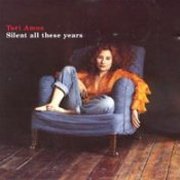 |
Silent All These Years (1992, 15.04) ***/TSilent All These YearsUpside Down Me and a Gun Thoughts |
 |
Under the Pink (1994, 56.52) ***/½ |
|
| Pretty Good Year God Bells for Her Past the Mission Baker Baker The Wrong Band The Waitress Cornflake Girl |
Icicle Cloud on My Tongue Space Dog Yes, Anastasia |
|
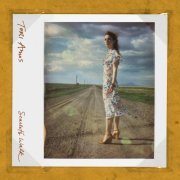 |
Scarlet's Walk (2002, 73.39) ***/T |
|
| Amber Waves A Sorta Fairytale Wednesday Strange Carbon Crazy Wampum Prayer Don't Make Me Come to Vegas Sweet Sangria |
Your Cloud Pancake I Can't See New York Mrs. Jesus Taxi Ride Another Girl's Paradise Scarlet's Walk Virginia Gold Dust |
|
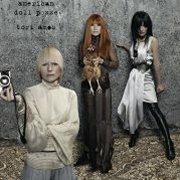 |
American Doll Posse (2007, 78.42) ***½/T |
||
| Yo George Big Wheel Bouncing Off Clouds Teenage Hustling Digital Ghost You Can Bring Your Dog Mr. Bad Man Fat Slut |
Girl Disappearing Secret Spell Devils and Gods Body and Soul Father's Son Programmable Soda Code Red Roosterspur Bridge |
Beauty of Speed Almost Rosey Velvet Revolution Dark Side of the Sun Posse Bonus Smokey Joe Dragon |
|
Current availability:
Mellotrons/Chamberlins used:
The trouble with Tori Amos is that her voice sounds so much like Kate Bush's that it's difficult to take her own material seriously; however, she seems to have a sizeable, mainly female following who couldn't give a toss that she sounds like someone else far more talented. Sorry, but there really isn't much comparison on the songwriting front, although I'm sure there are many who would disagree. Anyway, the first Mellotron use on any of her recordings is an interesting flute part on Upside Down, found on the European Silent All These Years EP, played by John Philip Shenale. I believe the track is also available on her Winter EP.
Under the Pink was her second 'proper' album, excluding the '80s nightmare of Y Kant Tori Read, which is apparently best forgotten. It's typical of her piano-driven singer-songwriter style, as far as I can make out, which means you're either going to love it or be really quite disinterested, I suspect. Most of it's pretty laid-back, with the occasional more energetic track to wake you up, but it's more for bedsits than cramped, sweaty gigs. John Philip Shenale 'arranges' both 'strings' and Chamberlin on Cloud On My Tongue, so it's only my assumption that he actually plays the thing, too. There are definitely real strings on the track, but I'll be damned if I can tell where the Chamby comes in, although some of the strings may emanate from it, though I'm not entirely sure why they bothered.
2002's Scarlet's Walk is a fairly typical Tori album, her songwriting much improved from her early work, highlights including Wednesday, brief, lovely solo vocal Wampum Prayer and I Can't See New York, complete with some great slide guitar work. Shenale plays Chamberlin again, although all I can hear are the flutes (alongside real strings) on Mrs. Jesus.
Tori's ninth album, 2007's American Doll Posse, sees her 'playing' five different characters (including herself), who take vocal leads on different songs. The album has more of a rock bent than most of her previous work, which isn't to say there isn't plenty of 'typical' Amos material to be heard. Just the one Mellotron track (played by Tori), with quite real-sounding flutes on closer Dragon, key-click an' all, also the only track here where her historical Kate Bushisms appear. Apparently, the album was only meant to be twenty tracks long, but another three were added as so-called 'bonus' tracks before release, which means they aren't really a 'bonus' at all, are they?
Tori credits 'Mellotron' on '98's From the Choirgirl Hotel (reviewed here), but admitted in an interview that it was actually samples, so I'm not entirely sure we can trust the tape-replay examples reviewed above, either. Anyway, two exceedingly average and only fairly good Mellotron/Chamby tracks, but perfectly good musically, assuming you like her style.
See: Samples etc.
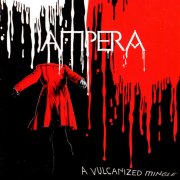 |
A Vulcanized Mingle (2007, 55.13) ****/TTTTMellow DramaticInside I'm Set You Don't Surprise Me - I am Dead We Know You Reaper Nagoya Eggscapade Antibody Haven Sun Has Turned |
Current availability:
Mellotron used:
To my knowledge, A Vulcanized Mingle (no, I don't know either) was Ampera's sole release, a very Nordic, old-school heavy prog album, not a million miles from, say, a female-fronted Anekdoten. Intense, riffy, psychedelic and progressive, all in one excellent package; if there's a downside, I'm not sure the bulk of their material's that memorable, but perhaps I just need to give it time. They certainly got the sound right, putting them ahead of most of the competition. Reformation time?
Tusmørke's Trond E. Aasen plays clearly real Mellotron, with strings all over punningly-titled opener Mellow Dramatic, choirs and strings on Inside I'm Set, upfront strings and a flute solo on You Don't Surprise Me - I Am Dead, major church organ use on We Know You Reaper, strings and background choirs on Nagoya and Sun Has Turned and strings on Antibody Haven. Mellotron Heaven! Why didn't I discover this ten years ago?
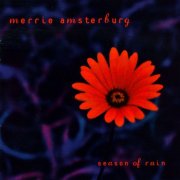 |
Season of Rain (1996, 43.36) **½/½ |
|
| Island Great Divide Lay of the Land World of Our Own Making This Will Never Be My Year Belonging Otherworld Say Good-Bye |
Lucky One Waiting Season of Rain |
|
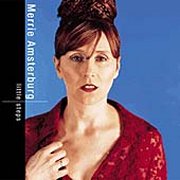 |
Little Steps (2000, 49.46) **½/0 |
|
| Little Steps Design My Romeo Radio Heart of My Head E × E Undertow State Highway 16 |
Different Today Atmosphere Opal Moon Sheltering |
|
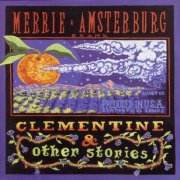 |
Clementine & Other Stories (2006, 49.36) ***/½ |
|
| Down in the Valley Black is the Color of My True Love's Hair Clementine Streets of Laredo All the Pretty Horses Shenandoah Johnny Has Gone for a Soldier Simple Gifts |
Wayfaring Stranger Lakes of Pontchartrain When Johnny Comes Marching Home |
|
Current availability:
Chamberlins used:
After singing in a handful of bands, Michigan native Merrie Amsterburg went solo in the '90s, her albums having something of a Lilith Fair vibe about them. Her debut, 1996's Season of Rain, has been released in two different forms, confusingly, its 1999 reissue completely changing its running order. Most of her material's much of a muchness, heavily lyric-driven, possibly at its best on Lay Of The Land. Mike Denneen plays Chamberlin on three tracks, with the vaguest of vague background strings on opener Island and Say Good-Bye and something indefinable on Belonging, possibly a looped percussion track. I'm tempted to chuck this into samples, but '96 is too early for sampled Chamby.
2000's Little Steps is more of the same, probably at its most effective on E × E (as in, 'East By East') and Different Today. Denneen supposedly plays Chamby on My Romeo, but, unless it's providing the track's mallet percussion (unlikely), I've no idea what it might be doing. 2006's Clementine & Other Stories is Amsterburg-plays-trad, including her takes on Black Is The Color Of My True Love's Hair, Shenandoah, When Johnny Comes Marching Home and, of course, a barely-recognisable Clementine. I don't wish to diss Ms. Amsterburg's compositional talents, but this is easily the best of these three albums, probably at its best on the super-sparse, Rhodes-and-vocal When Johnny Comes Marching Home. Paul Bryan plays (presumably) one of his Chamberlins, with occasional strings on Wayfaring Stranger, making it the most overt Chamby track here, which, sadly, isn't saying much.
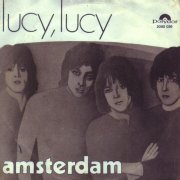 |
7" (1970) **½/TT Lucy, Lucy Double Piet, Peen and Willy |
Current availability:
Mellotron used:
Emerging from the ashes of the equally obscure Penny Wise, who released a handful of singles in the late '60s, Amsterdam were another 45s-only Dutch outfit, Lucy, Lucy being their second release of 1970, going by its catalogue number. It's a pretty drippy effort, frankly, easily outclassed by its organ-led instrumental flip, Double Piet, Peen and Willy. It was included on an undated Philips LP, presumably around the mid-to-late '70s, Indian Pipe, a useful (if incomplete) compilation of both sides of five of the band's singles, dating from 1970-73, better efforts including Julie Come Back and Let Your Body Be Strong; basically, the rockier material, unsurprisingly.
An unknown musician plays that well-used Phonogram Studios' M300 Mellotron on Lucy, Lucy, barely distinguishable from real strings, until a skronky, obviously Mellotron-generated chord comes leaping out of your speakers. Do you need to hear this? Not really, no.
 |
The Analogues (2006, 17.33) **½/TReputationGoing to California Black Kettle Tea Say Never |
Current availability:
Mellotron used:
The Analogues are (were?) the duo of Lydia Doran and Jim Saxa, both your classic 'smalltown kids make it to the big city', meeting up in New York. Their debut, self-titled EP showcases their jazzy singer-songwriterish folk/pop style, although, sad to say, I found it somewhat on the dull side, probably at its best on their slightly jazzed-up cover of Zeppelin's Going To California.
Richard Barone produces and plays what I take to be real Mellotron on Going To California, adding some high octave strings, drifting in and out of the mix. Perhaps surprisingly, I can't actually trace any other releases by the duo, Mellotronic or otherwise, while their domain name's for sale. Did they call it a day?
See: Richard Barone
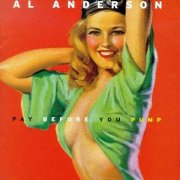 |
Pay Before You Pump (1996, 50.10) ***½/T |
|
| No Place in History Bang Bang Bang It Came From the South Change is Gonna Do Me Good Get Gone That Thang Under the Hood Listen to Your Heart |
Lonely Too Long After the Mardi Gras Hole in My Heart Without Your Love Hiss-on-U |
|
Current availability:
Mellotron used:
Al Anderson left US legends NRBQ in 1994, after a twenty-year-plus stint, 1996's Pay Before You Pump being his first post-split solo album (and third overall). Packed with high-octane rhythm'n'blues as it used to be, highlights include opener No Place In History, the slide frenzy of It Came From The South and Under The Hood, although I'd be pushed to name any clunkers, despite the album's fifty-minute length.
Producer Scott Baggett plays distant, yet real-sounding Mellotron strings on Without Your Love, one of the album's few ballads. Want to hear blues and boogie with a country bent? Look no further, although the album's minimal Mellotron content makes it less worthwhile on those grounds.
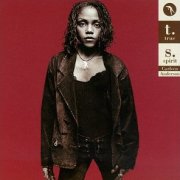 |
True Spirit (1994, 50.03) ***/T |
|
| True Spirit Morning Loving Mama Said Ain't Givin' Up on You Only One for Me Nervous Breakdown Secrets Let it Last |
Feet Wet Up Welcome to Changes Ian Green's Groove Conclusion |
|
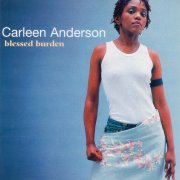 |
Blessed Burden (1998, 52.18) ***/½ |
|
| Fortunes Drive (including Reprise) Interlude Highlands pt. 1 Woman in Me Peace in the Valley Redemption Maybe I'm Amazed Interlude Highlands pt. 2 Who Was That Masked Man |
Burnin' Bridges Piece of Clay I'm Gonna Miss You Shifting Times Until I See You Again Leopards in the Temple |
|
Current availability:
Mellotrons used:
Carleen Anderson, daughter of soulstress Vicki Anderson and stepdaughter of James Brown sideman Bobby Byrd, is American, but currently based in the UK. She has a strong Paul Weller connection, having sung backing on both Stanley Road and Heavy Soul, as well as working with the Brand New Heavies. Are you thinking, "I'm probably not going to like her music?" Well, if you're one of this site's regular readers, you're almost certainly right. Her first solo album, the sumptiously-packaged True Spirit, is a decent enough soul/r'n'b effort, as far as I can ascertain, being seriously (and deliberately) unfamiliar with the genre. It does break out of the mould in places, with the dancefloor-pounding James Brown-esque Nervous Breakdown having more of a rock/funk groove about it, although most of the material fits the standard pattern of soul ballads mixed with more uptempo stuff. Mark Nevin plays 'Mellotron and guitars' on Let It Last, with a string part beginning a couple of minutes into the song. Weller's M400? Seems likely, but no way of knowing.
Four years on, Anderson followed up with Blessed Burden, basically, more of the same, her superb voice riding over a sympathetic set of material, probably at its best on her takes on Peace In The Valley and Macca's Maybe I'm Amazed. Although the first couple of tracks sound like they could feature Mellotron strings, the only actual credit is for Anderson's version of Van Morrison's Who Was That Masked Man, Brendan Lynch playing, quite literally, a handful of flute notes at the end of the track. From everything she says and does, you get the feeling that Anderson is a thoroughly honest performer; her website unflinchingly owns up to her turning fifty in 2007 and she seems to be as bullshit-free as many of her contemporaries... aren't.
See: Paul Weller
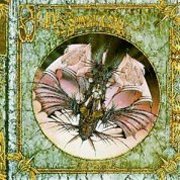 |
Olias of Sunhillow (1976, 44.08) ****½/T½ |
|
| Ocean Song Meeting (Garden of Geda) Sound Out the Galleon Dance of Ranyart Olias (to Build the Moorglade) Qoquag ën Transic Naon Transic Tö |
Flight of the Moorglade Solid Space Moon Ra Chords Song of Search To the Runner |
|
Current availability:
Mellotron used:
You know, it's really, really easy to take the piss out of ubiquitous Yes vocalist Jon Anderson. Everyone's favourite prog pixie, spaced-out old hippy, off with the fairies... See? Easy peasy. What isn't quite so easy is to say, "Um, actually, he's an extremely talented chap and Olias of Sunhillow is one of the most original albums to come out of the entire progressive era". I can quite honestly say that this album sounds like nothing else you'll have ever heard, including Yes, although there are points of reference, the chief one being, of course, Jon's unique voice, not to mention his harp work, by which I don't mean a bloody harmonica. Anderson admitted that he was 'pretty much a non-musician' when he recorded this album, which makes it all the more astonishing, as it's clearly been put together by someone who knows exactly what they're doing. Jon is the only credited musician, meaning he'd gained some technique on various instruments over the previous few years, although it's fair to say that none of this was that hard to play, as if it mattered.
Describing the material isn't easy, due to its complete uniqueness; think (if you will) of the more 'drifting' parts of the Yes canon, but with multiple Jons, backed by acoustic guitar, harp, occasional drums (though not in a drum kit kind of way) and plenty of monosynth parts, with an almost (sorry) 'tribal' feel in places. The concept (you knew there had to be one, didn't you?) concerns the Olias of the title, who builds a flying ship to leave his doomed world. Hippy nonsense? Yep, and we love it. I mean, the story printed inside the lavish gatefold sleeve is complete drivel, to be brutally honest, especially in 1976, but in JonAndersonWorld I'm sure it makes complete sense, while the music is quite ethereally beautiful, so all is forgiven. Anyway, anything other than a complete fantasy wouldn't fit the music, particularly Jon's later experiments with cheesy love lyrics, which he now seems doomed to repeat for the rest of his career.
Now, I'm taking a bit of a leap of faith by including this, as I'm still not entirely convinced that the choir work on the album is actually Mellotron at all, which is why I've had this down as a 'query' for so long. While some of the voices are clearly Jon multi-overdubbed, some of the others, principally the ones on Meeting (Garden Of Geda) sound like Mellotron male voices; there's even a rumour going round that Jon put his own voice onto a tape frame (thanks, Mark), which would explain their unusual sound, assuming it's true. The choirs on the other three highlighted tracks are less distinct and it's possible that I'm just making the whole thing up, but I've finally decided to include this until/if I should find out otherwise.
So; if you have any interest in progressive rock whatsoever and have shied away from this album in the past, buy it immediately. Unfortunately, the CD packaging is crap, with only half the lyrics printed (why?) and a cruelly cut-down version of the original's magnificent artwork, but it's the music that matters (as the sadly-missed Tommy Vance used to say) and this is an entirely unique and wonderful album. As for the Mellotron (assuming it's there at all), it's completely inessential, but that isn't why you're already ordering this online. Buy now.
See: Yes