




|
|
|
|
||
|
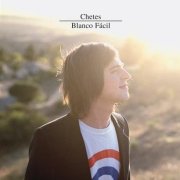 |
Blanco Fácil (2006, 44.05) **½/½ |
|
| Poco a Poco Otra Vez Se Fue el Dolor Completamente El Sonido de Tu Voz Camino a Casa Regresa Llego la Luz |
Que Me Maten Sobrevivi Que Vas a Hacer? Una Pieza |
|
Current availability:
Mellotron used:
Luis Gerardo Garza "Chetes" Cisneros is a Mexican musician who made his name with Zurdok and Vaquero, neither of whom, it has to be said, have made much impression outside the Latin world. 2006's Blanco Fácil is his first solo effort, consisting largely of Spanish-language Beatles-esque pop, none of it particularly standing out, to be honest. It's the kind of material that doesn't sound too bad for a few tracks, but by halfway through the album, you're willing it to finish.
Jerry Dale McFadden plays Mellotron, with choir stabs on Se Fue El Dolor and some messing about at the end of the track that makes me think the Mellotron's real, with similar on Camino A Casa, although that would appear to be it. Incidentally, at this juncture I feel I have to reprint a comment on Chetes' WikiPedia entry before it disappears, probably one of the most incompetent pieces of writing about music I think I've ever seen: "...so he learned about guitar distortion. This is a method of playing guitar where the sound is distorted, but the actual guitar remains intact". No shit, Sherlock; what, you mean you don't have to smash the thing up to get that sound? Wish someone had told me...
 |
VII (1974, 72.32) ***/T |
|
| Prelude to Aire Aire Devil's Sweet Italian From New York Hanky Panky Life Saver Happy Man (I've Been) Searchin' So Long |
Mongonucleosis Song of the Evergreens Byblos Wishing You Were Here Call on Me Woman Don't Want to Love Me Skinny Boy |
|
 |
X (1976, 41.55) **/½ |
|
| Once or Twice You Are on My Mind Skin Tight If You Leave Me Now Together Again Another Rainy Day in New York City Mama Mama Scrapbook |
Gently I'll Wake You You Get It Up Hope for Love |
|
Current availability:
Mellotrons used:
By 1974's VII, Chicago were already moving well away from their rock/jazz/blues beginnings and a distinct Latin influence had begun to make itself known. Saying that, the jazz-inflected material here is still vastly superior to the rampant balladry that was to become their stock in trade within two or three albums, although Happy Man and particularly (I've Been) Searchin' So Long stray dangerously close. Opener Prelude To Aire features cool Mellotron strings from Robert Lamm, underpinning a lengthy flute part, over Latin percussion, Mellotron cellos added to the mix towards the end of the piece. Byblos is another jazzy Latin thing, with background flutes and strings from David J. Wolinski, but that's it for the album (both tracks credited, so no guesswork here). Not Chicago's best, while the precipice of taste over which they were about to plummet is clearly visible, but VII has its moments, though I feel it may've made a better single album.
Two years on, X isn't entirely awful, surprisingly, though bloody close, with interesting chord sequences in a couple of tracks, which are then spoilt by completely naff arrangements. It also contains the utterly hideous If You Leave Me Now, surely one of the worst songs known to mankind, which docked this a good half star on its own. Suffice to say, unless you have a yen for the sort of anodyne crap they've been churning out ever since they decided to stop doing anything interesting, you want to avoid this album. Wolinski plays Mellotron strings on weepy closer Hope For Love, but to little effect, to be honest.
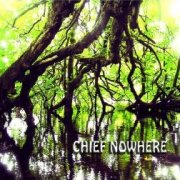 |
Chief Nowhere (2010, 36.36) ****/TThe Dropa StoneFrom 3 to 4 The Nile Song/She Beckons Across the Purple Plain Technical Difficulties Matador Madeleine's Lament Twilight Effect |
Current availability:
Mellotron used:
Chief Nowhere, a mostly instrumental heavy psych/prog outfit from California, are helmed by Andy Campanella, brother of Mellotron owner Rob (Lovetones, The Quarter After). Their eponymous 2010 debut's default position is a hazy kind of organ-led psych, best encountered on lengthy closer Twilight Effect, although other highlights include Across The Purple Plain's acid folk, Technical Difficulties' Clavinet grooves and a great cover of one of the heaviest things the Floyd ever recorded, The Nile Song (from More).
Campanella (R.) plays his M400 on Twilight Effect, with a heavily-reverbed flute line and full-on strings, pitchbent to a grinding halt at the track's end. Chief Nowhere is the kind of album that too few bands are making these days: psychedelic without even the merest hint of any tedious, tuneless, Velvet Underground-enslavement indie-ness. The band are working on their second release, but in the meantime, get thee to an online store and buy this one.
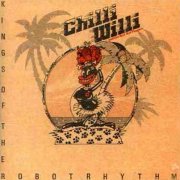 |
Kings of the Robot Rhythm (1972, 40.19) ***/T |
|
| Living Out My Suitcase The Ballad of Chilli Willi Window Pane I'll Be Home Nashville Rag That's All Right Mamma Drunken Sunken Red Neck Blues Get Your Gauge Up Let Your Love Come Down |
Happy You/Fiddle Dee Astrella From the Astral Planet Paper Mill A Page in History |
|
Current availability:
Mellotron used:
Chilli Willi & the Red Hot Peppers (are a certain later band aware of them?) were a fixture on the early '70s London pub rock scene, although, rather than the expected r'n'b, their debut album, 1972's Kings of the Robot Rhythm, is a largely acoustic country/folk/blues/ragtime collection. It seems that members of country/pub-rocking cohorts Brinsley Schwarz played on it, while one of two consistent members, Philip "Snake Finger" Lithman (who, as Snakefinger, went on to become the nearest legendary Californian weirdoes The Residents came to a public face), plays fiddle on several tracks, accentuating the album's country feel. Better tracks include opener Living Out My Suitcase, the fab, almost psychedelic instrumental interplay on Paper Mill and slightly epic closer A Page In History, although nothing here should offend the discerning listener who appreciates craftsmanship over stylistic boundaries.
Lithman played Mellotron, albeit only on the album's closing minutes, with a vaguely orchestral string part towards the end of A Page In History, although it's hardly one of the album's defining features. Given the band's relative obscurity these days (like the Brinsleys, they're known more as an alumni than in their own right), those of you who enjoy a little country/bluegrass pickin' of an evening may well not be aware that this might be right up your street, although I wouldn't bother for the Mellotron.
See: Snakefinger
 |
Riding High (1974, 34.43) ***/TCome on OverCrazy Talk There's Something I Like About That Makin' Time Ridin' High Time Don't Mean a Thing to Ya Far Side of the Sun (Suite) |
Current availability:
Mellotron used:
Led by Bill Henderson, Chilliwack are one of those rather ordinary hard-ish rock bands thrown up worldwide by the thousand during the early '70s, in this case from Canada, named for a city near Vancouver. For what it's worth, they belong to that pointless yet exclusive club of artists who've released more than one album of the same title (Peter Gabriel being an obvious example), their first two releases both being titled eponymously, for no known reason.
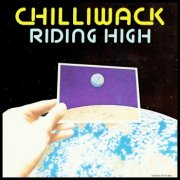
1974's Riding High was their fourth album, partially co-produced by fellow Canuck Terry Jacks, of Seasons In The Sun infamy, although he managed not to wreck the couple of tracks with which he was involved too badly. Most of the album consists of the expected middling rock, better moments including eight-minute closer Far Side Of The Sun (Suite), although it veers into country rock territory in the middle, and the title track, probably the most memorable thing here, although it suffers from the album's overall malaise, being at least a minute too long for its content.
Guitarist/keyboard player Howard Froese plays Mellotron, with a melodic string part on Makin' Time that just about scrapes one T. I don't know if the rest of Chilliwack's output is this average, but this really isn't the kind of stuff that still cuts the mustard a few decades on, I'm afraid, when you consider that Rush's debut and Bachman Turner Overdrive's Four Wheel Drive hailed from the same country the same year. Inoffensive, but largely inessential, with one so-so Mellotron track.
 |
Chillum (1971, 39.49) ***/T½Brain StrainLand of a Thousand Dreams Too Many Bananas Yes! We Have No Pajamas Promenade des Anglais |
Current availability:
Mellotron used:
Chillum was the third album by undeservedly lesser-known psychonauts Second Hand, or at least their twin enfants terribles, vocalist/keyboardist Ken Elliott and drummer Kieran O'Connor; it seems no-one can now remember why they also elected to use it as the band name. It's possible that the overt drug connotations were a deliberate attempt to piss someone off (record company? Society? Each other?), but that can only be a matter for conjecture.
The album opens with a side-long jam, Brain Strain, apparently recorded at guitarist Tony McGill's audition, which is remarkably good, all things considered. A brief proto-symphonic piece, Land Of A Thousand Dreams, is followed by a drum solo (Too Many Bananas) and another lengthy jam (Yes! We Have No Pajamas), before a final short well-arranged piece in Promenade Des Anglais, making this more of a jamming album than anything else. No great surprise that Elliott's Mellotron work is confined to the two short arranged pieces, with a major string part on the all-too brief Land Of A Thousand Dreams and a minor one on closer Promenade Des Anglais, making this a bit of a minor effort in the Mellotron Canon, though at least it's audible where used.
Elliott and O'Connor fell out dramatically in 1972, signalling the end of the band, although the collapse of their record company can't have helped. Eventually, they had another stab at fame and fortune as Seventh Wave, releasing a further two albums before the inevitable permanent rift, meaning that they probably reached their artistic peak on their first album, although I'm sure many of you will disagree. Chillum doubtless has its advocates, although its druggy jamming won't be to everyone's tastes and its Mellotron use is pretty low-key, though I've heard an awful lot worse.
See: Second Hand | Seventh Wave
 |
Jewels (1985, 15.55) ***/TTA-GirlGood Morning I Love You Diamond is My Best Friend Marble Eyes |
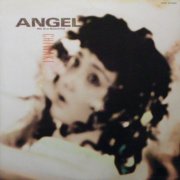 |
Angel.....We Are Beautiful (1986, 38.44) **½/TTT |
|
| The World is Beautiful Little Susie Birdy Day Yogoretainoni Angel Blue Angel Fate Adorufu wa Ōsama Lotta Love |
Ride on the Cloud Metallic Heaven |
|
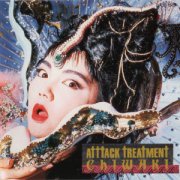 |
Attack Treatment (1987, 37.25) ***/T |
|
| Aurora Girl Please Please Yōsei no Umi Anata Nakunaru Angel Dust Pistol Song Cinemachinebula (minx mix) Sukyandōru |
Moonlight Madness Yūsei Shōjo Fiora |
|
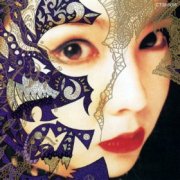 |
Dangerous is My Middle Name (1987, 37.59) ***/T½ |
|
| Animal X Dangerous is My Middle Name Ha! Ha! Ha! Bloody Summer Days Moon Child Save Me Divine Love Mosukoshi Baby |
Happy Birthday Ceremony Okaruto no Koibito |
|
Current availability:
Mellotrons used:
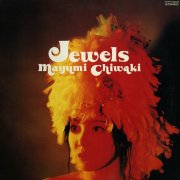
Mayumi Chiwaki is a somewhat by-numbers Japanese pop (but not specifically J-Pop) star, active in the '80s and '90s. 1985's Jewels EP kicks off with A-Girl, which sounds like the era's pop crossed with '70s glam rock, its other three tracks all sounding entirely different to each other. Hajime Okano on Mellotron, with a prominent string line on A-Girl and full-on flute and string parts on Marble Eyes. The following year's Angel.....We Are Beautiful freely mixes various styles, not least hard rock, electro-, mainstream and (of course) J-pop, all given an overly-glossy '80s production sheen, probably heard at its best on the glam rock-ish Angel Fate. Okano plays a startlingly large amount of Mellotron, years after its heyday, with long string notes on Little Susie, a flute melody on Yogoretainoni, an upfront strings solo section on Angel Blue, background strings on Angel Fate and Adorufu Wa Ōsama and several string melodies on Lotta Love.
The following year's Attack Treatment is a shift towards Chiwaki's rock'n'roll side, possibly at its best on the punk-lite of Angel Dust and Pistol Song and propulsive closer Yūsei Shōjo Fiora. Okano on Mellotron again, albeit considerably less so than before, with queasy strings on Anata Nakunaru and Angel Dust, all choir sounds appearing to be generic samples. Dangerous is My Middle Name, from later the same year, is more hard rock than punk, highlights including Ha! Ha! Ha!, like an upgraded, Japanese version of '80s Robert Palmer and the stomping Divine Love. Okano's Mellotron turns up on four tracks, with upfront strings on Ha! Ha! Ha! and Mosukoshi Baby, distant ones on Save Me and wonky ones on Happy Birthday Ceremony. A quick caveat: it's quite possible I've missed Mellotron parts on all these releases; several of the ones I've noted are buried well down in the mix.
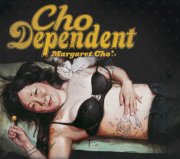 |
Cho Dependent (2010, 51.18) ***/½ |
|
| Intervention Calling in Stoned Your Dick Baby I'm With the Band Hey Big Dog I'm Sorry Lice |
Enemies Asian Adjacent Gimme Your Seed Eat Shit and Die Captain Cameltoe My Puss |
|
Current availability:
Chamberlin used:
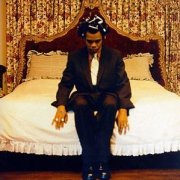
Margaret Cho is a Korean/American comedienne whose confrontational style has made her a good few enemies over the years; usually, though not always, a mark of quality (Andrew "Dice" Clay, anyone?). By American standards, she's startlingly right-on, which she seems to have no problem reconciling with her frequently borderline offensive humour, displayed on what I believe is her debut musical release, 2010's Cho Dependent (ho ho). Cho gets loads of famous friends in to guest, including Tommy Chong (of Cheech &... fame, of course), Fiona Apple, Grant-Lee Phillips, Ani DiFranco and our old friend Jon Brion, although it's a moot point just how much they contribute.
Musically, the album veers between a kind of mainstream folk/pop/rock (most of it), electro (Asian Adjacent, Gimme Your Seed) and, er, hip-hop (amusingly puerile closer My Puss). Lyrically, the bulk of the album tackles the kind of topics that make conservatives squirm (unsurprisingly, Cho is no fan of their ethos), although, all too often, the end result is slightly tiresome 'I've got a vagina' stuff like Your Dick or Captain Cameltoe. Despite myself, though, the juvenilia of My Puss raised a smile, largely for its outrageous rhymes ("My puss is soft like velvet, your puss, dead like Elvis").
Jebin Bruni plays credited Chamberlin strings and brass on Eat Shit And Die and uncredited strings on Your Dick, sadly nowhere near enough to interest those of you who judge albums purely on their tape-replay content (whadd'ya mean, 'me'?). Those who just can't get enough edgy humour may well go for this, though, while one of the album's bonuses features Cho's excellent voice, putting her several steps above most of her comedic contemporaries, most of whom couldn't carry a tune in a bucket. One for your lesbian friend with a sense of humour.
 |
Black Music (1998, 46.23) ***½/TT |
|
| Life Half a Man Don't Look Down Clinic My Mom Safe and Sound A Cheap Excuse Hangover Five |
Hangover Nine Stupid Again It's All Good Half a Man |
|
Current availability:
Mellotron used:
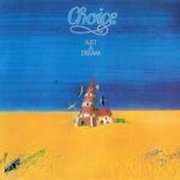
Chocolate Genius (now Chocolate Genius Inc.) is basically the nom de plume of Marc Anthony Thompson, a New York-based musician who clearly has no intention of conforming to any stereotypes, racial or otherwise. Black Music apparently refers to the darkness within most of its songs, although every now and again (doubtless to confound the listener), Thompson toys with one or another of the styles the ill-informed observer may expect of him. The album starts brilliantly with the stark Life, featuring several other tracks of searing honesty, not least My Mom, which is painful to even listen to, so I can't imagine what it cost Thompson to write and record something so nakedly open. There are weaker tracks; the rather anodyne Clinic veers rather too close to the kind of clichés you might expect from the album's title, but the low points are few and far between.
Mellotronically speaking, John Medeski makes his presence felt immediately, playing a brilliantly seasick Mellotron strings part on opener Life, with lesser input on Don't Look Down and Safe And Sound. This is an unexpectedly good album by an artist of whose existence I was previously unaware; Thompson covers several musical bases and actually writes lyrics worth listening to, which is more than I can say for, ooh... 99.9% of lyricists? Probably more. Only one full-on Mellotron track, but an essential for Medeski fans and worth hearing for the rest of you. Incidentally, as this is an album from the '90s, it includes a hidden, unlisted track, a different version of the excellent Half A Man; the CD's running time has been adjusted accordingly.
 |
Just a Dream (1980, 40.17) ***/TT½IxtlanHollow Men All the Things Remembrances Sonnenaufgang Old Piece of Rock Back Up Nothing to Hide |
Current availability:
Mellotron used:
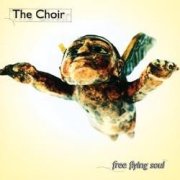
Choice grew out of one of the best German one-shots (excluding their apparently awful reformation album), Epidaurus, including both of that estimable outfit's keyboard players, Günther Henne and Gerd Linke. Compared to their superb effort of only three years earlier, Choice peddled a relatively mainstream form of prog on Just a Dream, which I've seen compared to Kayak, or maybe Camel, although just because it was quite late in the day for prog, that didn't have to mean giving in to The Man (see: Tau). Actually, I'm being a little unfair here; there are several reasonable tracks on the album, including Ixtlan and Old Piece Of Rock, it's just that after the Epidaurus album of all of three years earlier, it's a slight let-down.
Anyway, Mellotron on four tracks, with effective strings on Ixtlan and less of the same on Hollow Men, choirs on Remembrances and strings and choir on closer Nothing To Hide, although the best use has to be on the first track. So, not bad, not great, more for those into neo-prog, although Just a Dream predates that style by a couple of years.
See: Epidaurus
 |
Free Flying Soul (1996, 44.37) **/T |
|
| Salamander Polar Boy Sled Dog Away With the Swine The Ocean If You're Listening The Chicken Slow Spin |
Leprechaun Yellow-Haired Monkeys Butterfly The Warbler |
|
 |
Flap Your Wings (2000, 39.58) **/T |
|
| Flap Your Wings Shiny Floor Mercy Lives Here Hey Gene Sunny Flowing Over Me Cherry Bomb I Don't Mean Any Harm |
A Moment in Time Beautiful Scandalous Night |
|
Current availability:
Chamberlin/Mellotron used:
The Choir are a CCM outfit with links to the surprisingly inoffensive Daniel Amos and the vile City on a Hill series. They've been around since the mid-'80s, making them a textbook case of how Christian acts can completely bypass the mainstream, playing and selling records to an almost exclusively 'faith' audience, as I believe it's horribly known. 1996's Free Flying Soul is pretty dullsville, though nowhere near as nasty as multiple similar efforts, although nothing about it made me want to hear any of it again. Tape-replay player to the Christian community, Phil Madeira, adds Chamberlin flutes and a high cello part to The Ocean, with more cellos on Butterfly, though it really isn't enough to redeem (let's keep to Biblical terms, OK?) this in any meaningful way.
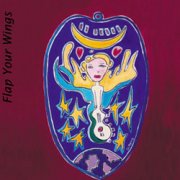
Calling 2000's Flap Your Wings less offensive than many similar artists could be construed as a recommendation, which it isn't; its first couple of tracks are in a turn-of-the-millennium indie style, complete with random guitar noise and other tricks used at the time, but it quickly descends into the expected lightweight mush, albeit still nowhere near as bad as some of the horrors I've encountered. Madeira turns up again, on Mellotron this time, but only just, with nothing obvious apart from the flutes on A Moment In Time, although the strings may just possibly be hiding away on a track or two.
Tim Christensen (Denmark) see: |
 |
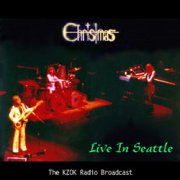 |
Live in Seattle: The KZOK Radio Broadcast (2003, recorded 1979, 58.51) ****/TTT½The Opening/Chartres CathedralThe Sun Beautiful One Mother Nature's Son Calling Me Carry on in Style/The Sailor Nicholas Carry on in Style (demo) |
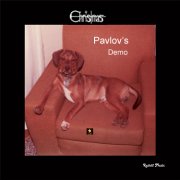 |
Pavlov's Demo (2014, recorded 1979, 12.26) ***½/T½I Want to Know YouKeep Going My Heart's There |
Current availability:
Mellotrons used:
Seattle's Christmas, formed as late as 1977, are yet another in a seemingly-unending stream of obscure US progressive acts of the '70s to have their work (re)discovered in recent decades. As far as I can work out, this lot barely made it into the studio, but a pro-quality live recording, Live in Seattle: The KZOK Radio Broadcast, was released in 2003. Unsurprisingly (and, for an American band, typically), they were heavily influenced by Yes, particularly obviously on Chartres Cathedral and The Sun, although the jazzy, piano-drive Beautiful One, the polysynth-heavy Mother Nature's Son (not the Beatles song) and guitar-fest live set closer Nicholas see them developing their own sound.
Mark Robertson plays what I think of as a transitional selection of keyboards, integrating a new polysynth (sounds like a CS80) in with his piano, Mellotron and monosynth, although, interestingly, no organ. Only two Mellotron-free numbers, with chordal strings on both parts of The Opening/Chartres Cathedral, The Sun, Beautiful One, Calling Me (in full-on Genesis mode), Carry On In Style/The Sailor and the demo version of Carry On In Style tacked on the end. This really is splendid stuff, I have to say; Christmas had the bad luck to be a band out of time, or they may have made at least a little more headway.
Their Pavlov's Demo was the result of a recording session at Pavlov's Dog's Seattle studio (I've no idea why a band from St. Louis would end up in the Northwest, but there you go), giving us two decent enough, if shorter songs and the excellent, six-minute My Heart's There, also the recipient of Robertson's only Mellotron work this time round, with overdubbed string and choir parts on the track. Various members of Christmas went on to play in glossy, prog-lite crew Cairo, while a reformed version of the band have made a number of prog-even-liter (?) recordings in recent years, but I'd stick with the live CD, if I were you.
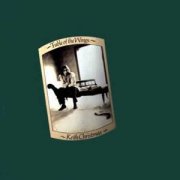 |
Fable of the Wings (1970, 37.40) ***/TWaiting for the Wind to RiseThe Fawn Lorri Kent Lullaby Hamlin Fable of the Wings Bednotch |
Current availability:
Mellotron used:
Keith Christmas had his moment in the sun in 1969, when he played guitar on David Bowie's David Bowie album, better known as Space Oddity, appearing at the first Glastonbury festival the following year. He released five solo albums from the late '60s to the mid-'70s, the second being 1970's Fable of the Wings, much of which sounds a lot like the less-remembered tracks from Space Oddity, lengthy acoustic numbers which tell a story over rather too long a timespan, generally speaking, the eight-minute Lorri being a typical example. The more electric tracks tend to be the more interesting ones, although some of the jamming (notably on closer Bednotch) does go on a bit.
Ian Whiteman (Gary Farr, Andy Roberts) plays Mellotron, with flute and vibes parts on Hamlin, although that would appear to be it. So; not a bad effort of its type, but a little unexciting, not really matching up to the better singer-songwriters of the era. Once decent Mellotron track, but not enough to make a purchase worthwhile.
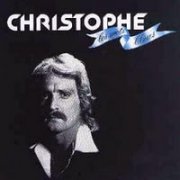 |
Les Mots Bleus (1974, 34.35) ***/T½Le Dernier des BevilacquaSenorita C'est la Question Les Mots Bleus La Mélodie Le Petit Gars Drôle de Vie Souvenirs |
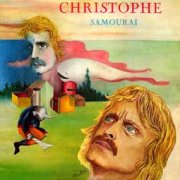 |
Samouraï (1976, 29.15) ***/TSamouraïMerci John d'Etre Venu Tant Pis Si J'en Oubli... Paumé Pour que Demain ta Vie Soit Moins Moche 1ère partie 2ème partie/Les Dragons de Mes Chimères 3ème partie Le Cimetière des Baleines |
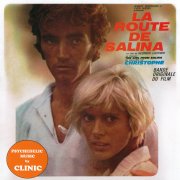 |
La Route de Salina (1970) ***/T[Christophe contributes]The Girl From Salina (vocal) The Girl From Salina (instrumental) That's Nothing Sunny Road to Salina The Girl From Salina (orchestral) Green Dream Red Mountain |
Current availability:
Mellotrons used:
Daniel "Christophe" Bevilacqua (1945-2020) was a French singer-songwriter who went through all the usual career highs and lows, breakdowns and alcoholism de rigeur. After an early album in 1966, he as good as disappeared until the early '70s, returning with '73's Les Paradis Perdus (Mellotronic status currently uncertain), lyrics, bizarrely, mostly written by a young Jean Michel Jarre, later, of course, known for his instrumental music. Strange. Christophe followed up a year later with the diverse Les Mots Bleus (The Blues Notes, presumably a pun), veering between the epic, self-referential opener Le Dernier Des Bevilacqua, the sleaze-rock-lite of C'est La Question, the strange, sparse Le Petit Gars and the pocket symphony of closer Souvenirs, all interspersed with variations on the expected French chanson. Dominique Perrier (Roche) plays Mellotron, with a lush string part on Drôle De Vie, while Souvenirs finishes with nearly a minute of nowt but multitracked choirs.
Two year on, Samouraï is probably less diverse, at its best (unsurprisingly) on the three-part Pour Que Demain Ta Vie Soit Moins Moche, although the bulk of the album concentrates on his trademarked overblown balladry. Perrier on Mellotron again, although the only likely candidate is the flute run on part two of Pour Que Demain Ta Vie Soit Moins Moche, Les Dragons De Mes Chimères. Although a long way from 'prog' as we know and love it, these albums have a certain level of mid-'70s experimentation about them that makes them more palatable than your standard French-language balladry. He also contributed to the soundtrack to 1970's La Route de Salina, reviewed here.
See: La Route de Salina
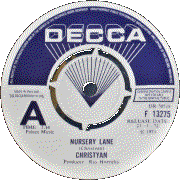 |
7" (1972) **½/T Nursery Lane Desperate Dan |
Current availability:
Mellotron used:
The deeply obscure Christyan (thanks for this, Mattias) were future Pilot bassist David Paton's band, formed after he left the first Bay City Rollers lineup. Point of interest: were there any Scottish pop musicians who didn't play with the Rollers at one point or another in the early '70s? Midge Ure springs to mind. Anyway, their sole release (and then only in promo form), Nursery Lane b/w Desperate Dan, sounds more 1968 than '72; I know the regions were rather behind the London scene, but four years? In fairness, the flip's more '70 than '68, if that's an improvement. The 'A' is a passable slice of post-psych pop, while the flip's more '70-ish soft rock, but this was never going to set the world alight.
Someone plays Mellotron strings on the 'A', if only for a brief burst in the middle and another at the end. If you feel the need to hear this, it's on YouTube. I've heard worse, but I've heard a lot better...
See: Pilot
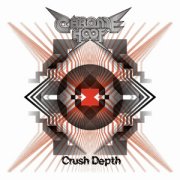 |
Crush Depth (2010, 59.09) ***/T |
|
| Core Delusion Crystalline One Day Labyrinth Sea Hornet Mental Peptides Bunkers Paradise Towards Zero |
Witches Instruments and Furnaces Third Sun Descendent Deadly Pressure Vapourise (Instrumental) Anorexic Cyclops |
|
Current availability:
Mellotron used:
Despite knowing several people in Chrome Hoof or in their orbit, I can say in all honesty that I'm not at all sure where they're coming from. Imagine a ten-piece band playing a mixture of awkward metal, funk, disco, prog and probably another dozen or so genres, all thrown into a large pot and given a good kicking. While wearing silver hooded robes. The robes are a canny move, getting them the press coverage they may otherwise not have got, although their unique musical vision was bound to attract attention sooner or later. 2010's Crush Depth is their third full-lengther, distinctly different to the EP I've heard from a few years earlier, although I still don't think I really get where they're coming from. Best tracks? Hard to say, due to the diversity on display here; I actually don't feel qualified to comment, so have a listen on YouTube.
I know bassist/leader Leo Smee both through his Cathedral membership and via mutual friends, not least Cardiacs/Knifeworld's Kavus Torabi, which is how I came to bring my M400 and Taurus pedals up to Leo's flat in the summer of 2009. Leo, his brother Milo and regular keys player Emmet Elvin all played the Mellotron over the course of a few hours, putting down the flutes and wobbly, pitchbent choirs on Mental Peptides and the strings on Third Sun Descendent. I'm not saying there aren't any more parts - I'm sure they recorded loads more - but to my ears, there's nothing definite. I also provided the band with samples of Mellotron tubular bells, but I don't hear them anywhere, either.
See: Cathedral | Knifeworld
 |
You & Me (1973, 40.16) **½/½ |
|
| Come and Join Me Broken Engagements You and Me Reality in Arrears Dream of Your Maker Man Ode to an Angel You're Not Listening Chiswick Flyover |
The Youth I Dreamt in Slipped Away Falling Down an Endless Day |
|
Current availability:
Mellotron used:
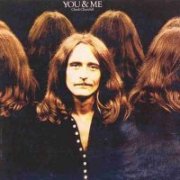
Michael George "Chick" Churchill is a classically-trained pianist best-known as on/off keyboard man with Ten Years After, possibly the archetypal British blues/rock band, featuring Alvin Lee's lightning-fast guitar work. You & Me is Churchill's only solo album, pretty typical of its era, consisting of lightweight singer-songwriter fare with added keyboards, or middle-of-the-road rock with no outstanding features, as dated as 'I'm with stupid' T-shirts and maroon and black stack heel shoes. A bevy of famous friends (Jethro Tull's Martin Barre, Cozy Powell and various members of pre-fame Supertramp included) do little to liven up the proceedings, sad to say.
Next to no obvious Mellotron on the album, with Churchill only noticeably adding any to opener Come And Join Me, with background strings that add little to the track. The strings on a couple of other tracks appear to be real, making this a pretty low priority on your 'Mellotron must-haves' list.