




|
|
|
|
||
|
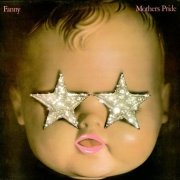 |
Mother's Pride (1973, 43.33) **½/0 |
|
| Last Night I Had a Dream Long Road Home Old Hat Solid Gold Is it Really You? All Mine Summer Song Polecat Blues |
Beside Myself Regular Guy I Need You Need Me Feelings I'm Satisfied |
|
Current availability:
Mellotron used:
Now almost forgotten, Fanny were one of the very first all-female bands (as against singing groups), who'd picked up a reasonable following by the early '70s, not to mention famous fans (notably David Bowie). 1973's Mother's Pride (produced by Todd Rundgren) was their fifth album, largely consisting of middling-to-soft rock along the lines of Long Road Home and All Mine, although better efforts include opener Last Night I Had A Dream, Summer Song and Regular Guy; shame about the off-key vocals on Solid Gold, though...
Nickey Barclay allegedly adds Mellotron, although given that the solo flute on Feelings is clearly real, I've no idea where it might be heard. Although this is available again through reissue kings Rhino, I'd be lying if I said this is really worth hearing, let alone 'unmissable'; it's a very ordinary so-so early '70s rock album with no defining features. Even any obvious Mellotron.
See: Millington
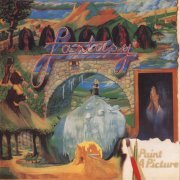 |
Paint a Picture (1973, 44.57) ****/TT |
|
| Paint a Picture Circus The Award Politely Insane Widow Icy River Thank Christ Young Man's Fortune |
Gnome Song Silent Mime |
|
 |
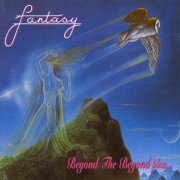 |
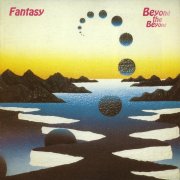
Beyond the Beyond (1992, recorded 1974, 39.28) ****½/TTTTIntroductionBeyond the Beyond Reality Alanderie Afterthought Worried Man Just a Dream Winter Rose Church Clock |
Current availability:
Mellotrons used:
Fantasy, originally known as Chapel Farm, were an odd sort of band, being rather late-psych/proto-proggish in 1973, by which time most bands had moved on to pastures new. For all that, Paint a Picture (the only record released in their lifetime) is a good album, just not the classic that it's sometimes made out to be. The songwriting's excellent, slightly reminiscent of the late-psych style that Gracious! did so well, with strong melodies and coherent song structures to the fore, particularly on the title track. Most of the album's keyboard work, from David Metcalfe, is either Hammond or Farfisa organ, plus bits of synth. To be honest, there's nothing like as much Mellotron as has often been claimed, only three tracks in evidence, two of which make particularly good use of the instrument. Paint A Picture itself, as well as being a gorgeous song, builds up to a Mellotron strings-heavy part towards the end and Gnome Song has some excellent string and flute parts, although Thank Christ is very low-key on the Mellotron front.
After recording an unreleased second album, the band hung around for another few years until quietly slipping away as punk hit in '77. That would've been it for Fantasy, if it hadn't have been for Pete Sarfas at the Audio Archives label, who dug up those unreleased tapes, releasing them as Beyond the Beyond in 1992. Well, would you believe it? It's brilliant. The songwriting's easily the equal of that on their debut, while their sound had progressed towards a slightly more 'rock' direction and there's more Mellotron, although not on possibly the album's best track, Afterthought, which ends with a fantastic classical adaptation, more than the equal of many by better-known bands. The title track waits until the chorus to bring in the Mellotron strings, to incredible effect, whereas Alanderie is several minutes in before any appears. Metcalfe uses choirs on this track, incidentally, proving M400 ownership (I had some strange idea at some point that they used a MkII). The other Mellotron tracks make good use of the instrument, though not in quite the same league as these two, but all in all, an excellent album on every front. Top marks Audio Archives.
In '94, Audio Archives put out another Fantasy album, Vivariatum (***½), made up of early- and late-period demos, plus a b-side from the Paint a Picture sessions, I Was Once Aware. The CD is, sadly, entirely Mellotron-free, but the story doesn't end there. After both CDs sold out, most of the best tracks from Vivariatum, irritatingly minus the b-side, were added to the Beyond the Beyond tracks, along with a previously-unavailable demo, as Beyond the Beyond Plus... If only I Was Once Aware was on the disc, it would be the ideal complement to Paint a Picture, as the later tracks really aren't worth the effort. To add to the confusion, Lake Eerie Records, based in Illinois, reissued Paint a Picture, adding most of Beyond the Beyond as bonus tracks, though not I Was Once Aware. Again.
 |
'The Cave' Down to the Earth (1975, 53.45) ****/TTT |
|
| Northern Land Birds Flying to the Nest The God of Water Saying to the Land The God of Wind Moving, Looking, Trying, Jumping Wa, Wa Mystery of Northern Space |
The Cave Down to Earth Four Minds Transmigration |
|
 |
Nipponjin: Join Our Mental Phase Sound (1975, 54.02) ****/TTT½ |
|
| Nipponjin The Cave Undiscovered Northern Land Timeless The God of Water River of Soul The God of Wind Movin' Lookin' |
Yamato Mystery of Northern Space |
|
 |
Parallel World (1976, 70.59) ***½/TMetempsychosisEntering - Times Kokoro Parallel World Amanezcan Origin Zen Reality New Lights In the Year 2000 |
 |
Tenkujin (1977, 34.32) ***½/TDecensionTenkujin Timeless Phase Nagare From Far East Ascension |
Current availability:
Mellotrons used:
The Far East Family Band started life as Far Out, mutating into the FEFB after their sole album, Nihonjin. A full-on Japanese psych/prog outfit, they not only unleashed Kitaro onto the world, under his real name of Masanori Takahashi, but also produced some good music in their own right. There seems to be some confusion over their discography (rare for a Japanese band. NOT!), but 'The Cave' Down to the Earth appears to be the first album released under their new name, living up to its trippy title admirably, although the straight early Floyd steal in the title track was probably less than completely necessary. Passable amounts of Mellotron, played by either Takahashi or Fumio Miyashita (or maybe Akira Ito?), with choir parts on a few of the earlier tracks, with more strings later on.
They followed up with Nipponjin, produced by Klaus Schulze. Just to confuse the issue, the album's spelled at least two other ways, is sometimes attributed to Far Out and is made up of re-recordings of tracks from the FEFB/Far Out's two previous albums. Confused? Me too. Just to add to the confusion, my CD lists ten tracks on the back, but only contains five on the disc, the overall time matching up, but reversing the original LP sides, entailing me playing the album three times before I could work out what was going on. Oh well, at least it got a fair hearing...
After all that, Nipponjin: Join Our Mental Phase Sound (love that subtitle!) is a dead cool album, falling into that post-psych area that the Japanese did so well in the '70s (note the early Floyd references in The Cave), before prog belatedly kicked in properly there towards the end of the decade. Unusually, the lyrics are (mostly) in good English, given that it's all hippy-dippy stuff anyway. All I can say is, they must grow industrial-strength weed there, 'cos the country seems to've produced more stoned-out bands than just about anywhere else, right up to this day (SEE: The Acid Mothers Temple & Melting Paraiso UFO...). [Note: it's apparently extremely unacceptable, even amongst musicians. Strange.] Having eventually got the running order straight, the sixteen-minute title track has some excellent Mellotron string work, particularly at the end of the piece, while the Undiscovered Northern Land/Timeless segue features some great upfront choir. River Of Soul has a couple of bits, but the strings on closer Mystery Of Northern Space are real.
The lengthy Parallel World is even trippier than its predecessor, including, in its title track, a forty-minute, six-part epic of stoned something-or-other. The album isn't entirely instrumental, but most of it consists of more of that post-psych 'space jamming', almost certainly heard better when not entirely compos mentis, I suspect. There's the odd burst of Mellotron strings on all three highlighted tracks, with a short choir section towards the end of Parallel World itself, though I've no idea on which part. Not really a Mellotron album, but a fine example of the genre. Tenkujin (spelled various ways) differs wildly from its predecessor, being six short(-ish) tracks, largely vocal. Various online reviewers have commented that it isn't the best starting place for someone wishing to hear the band and, while difficult to deny, it's still a decent listen, if far less trippy than their earlier works. Several tracks feature what sounds like real strings and possibly string synth too, but the only obvious Mellotron work, definitely from Fumio Miyashta this time, is some heavy choirs on closer Ascension.
See: Kitaro
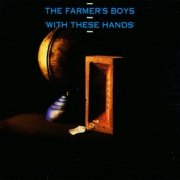 |
With These Hands (1985, 42.27) ***/½ |
|
| In the Country I Built the World Sport for All Art Gallery Something From Nothing Phew Wow! All of a Sudden Heartache |
Walkabout Whatever is He Like |
|
Current availability:
Mellotron used:
Since I read the weekly UK music press right through the '80s, I should probably be aware of Norwich's self-deprecating The Farmer's Boys, but I'm afraid they've drawn an indelible blank in my battered grey matter. In fairness, I'd have hated them at the time, as they didn't sound like Dio or something, but, the better part of thirty years on, their charms have become more apparent. 1985's With These Hands is an appealing, early indie-pop album, vocalist Baz channelling Scott Walker throughout, top tracks including opener In The Country (a lost pop classic, no less), closely followed by Phew Wow!, although nothing here offended me, despite the occasional burst of '80s production.
Frog (this lot didn't really go for that 'full name' lark) is credited with Mellotron, surprisingly and indeed, there it is on All Of A Sudden, with an occasional male choir part that couldn't really come from anything else. Although this is a bit of a period piece, it has some real gems lurking in its grooves, although you're really not going to bother for its Mellotron use.
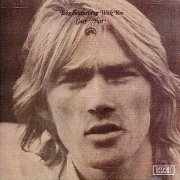 |
Take Something With You (1969, 44.36) **½/T |
|
| Don't Know Why You Bother Child The Vicar and the Pope Green Two Separate Paths Together Take Something With You Dustbin Time Machine Why Not |
Curtain of Sleep Goodbye |
|
Current availability:
Mellotron used:
Gary Farr (1944-1994) was a British singer-songwriter who led an R'n'B band in the '60s before recording Take Something With You, with members of Mighty Baby (ex-The Action) and Blossom Toes. The album's fairly typical of the post-psych era, with a heavy helping of Dylan in Farr's lyric writing and vocal style and a preponderance of acoustic strumalongs, which, sadly, don't stand up that well today. Too much of the material focuses on the lyrical content over the music, with the almost-inevitable result that the album's overloaded with songs consisting of a couple of chords repeated ad infinitum, operating merely as a vehicle for Farr's poorly-scanning lyrics.
Ian Whiteman plays Mellotron (almost certainly a studio MkII) strings on Why Not, although it would have worked nicely on several other tracks (common complaint, this). Overall, it doesn't lift a fairly mediocre album enough to really make it worth hearing for the Mellotron, unless you don't have to pay much/any money for it.
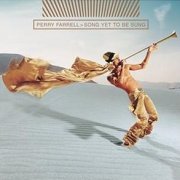 |
Song Yet to Be Sung (2001, 48.44) *½/½ |
|
| Happy Birthday Jubilee Song Yet to Be Sung Did You Forget Shekina Our Song Say Something Seeds King Z |
To Me Nua Nua Admit 1 Happy Birthday Jubilee (Reprise) |
|
Current availability:
Chamberlin used:
Simon "Perry Farrell" Bernstein ('peripheral', geddit? No? Oh, never mind) rose to fame as vocalist/general factotum of Jane's Addiction, who somehow managed to appeal to both metal and indie fans; good trick if you can do it. After their split and Farrell's subsequent short-lived outfit, Porno for Pyros, he released this solo effort, Song Yet to Be Sung in 2001. Jane's fans were, by and large, disappointed and it's easy to see why, as the album consists of mainly electronica-based material, with huge helpings of even-then dated sampled beats and the like; the multiple credits for 'programming' rather give the game away. He might've got away with it had it been stuffed with great songs, but, er, it's not.
Patrick Warren plays 'Chamberlain' (can ANYONE spell this correctly? Please?) on To Me, with a few string chords that don't especially enhance a thoroughly average song. Listen, steer well clear of this album; I'm sure it's impeccably produced, but it's largely shit. Avoid.
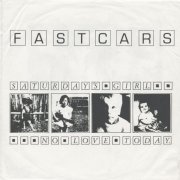 |
7" (1981) ***/TT Saturday's Girl No Love Today |
Current availability:
Mellotron used:
I've seen Sydney's Fast Cars described as 'punk', but both sides of their first single, Saturday's Girl, are more new wave pop, albeit played with a suitably lo-fi punky energy. The Buzzcocks spring to mind, which, given that Fast Cars may well be named for a 'cocks track, is fairly appropriate. None of the musicianship's up to much, frankly, while Dianah Levy's voice, while clear and melodic, lacks a certain something; pitch, I believe it's called.
Fabian Peter Byrne (that's what it says here) plays Mellotron, with melodic, phased cello lines on both sides of the disc, although, were it not credited on the sleeve, you might have trouble recognising it. Deep Mellotron Cuts, I think.
 |
God's Favorite Customer (2018, 38.38) ***/T |
|
| Hangout at the Gallows Mr. Tillman Just Dumb Enough to Try Date Night Please Don't Die The Palace Disappointing Diamonds Are the Rarest of Them All God's Favorite Customer |
The Songwriter We're Only People (and There's Not Much Anyone Can Do About That) |
|
Current availability:
Mellotron used:
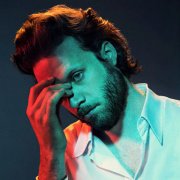
Father John Misty is the nom de plume Josh (a.k.a. J.) Tillman has used since 2012, 2018's God's Favorite Customer being his fourth release under that moniker to date. It's a good (and occasionally great), downbeat Americana album, for want of a better description, possibly at its best on the witty Mr. Tillman, sending himself up mercilessly, the heartfelt The Songwriter and closer We're Only People (And There's Not Much Anyone Can Do About That).
Tillman's credited with Mellotron on two tracks, with distant flutes on Just Dumb Enough To Try and We're Only People, although, weirdly, the most major use here, by some way, is the uncredited upfront flutes (and cellos?) on the title track. Why no credit? Who knows?
See: Samples etc. | J. Tillman
 |
Light Shining Through (2013, 35.36) ***½/T |
|
| Blind Man I Beg You Please Take My Hand Eyes Shut It Isn't Over Light Shining Through Moon Jam How it's Done |
Over and Over Again I Know What I Need Now is the Time |
|
Current availability:
Mellotron used:
The Father, the Son & the Holy Simon are a Belgian retro blues-rock outfit, working in vaguely the same area as the Netherlands' DeWolff, only without the soul influence. Their second album, 2013's Light Shining Through, is a decent record, without being particularly outstanding, probably at its best on the Uriah Heep-channelling opener Blind Man, the punchy I Beg You Please and brief instrumental Moon Jam, although the choppy, reggae guitar on Over And Over Again doesn't really work.
Ruud Peeters plays his own M400 (also used by DeWolff and a raft of others), with background strings on Blind Man and closer Now Is The Time and a more upfront part on Eyes Shut. You get the feeling that this band are far better live than on record; hopefully, they avoid DeWolff faux-James Brown excesses on stage.
 |
BBC Sessions + (2001, recorded 1973, 48.21) ***½/TBBC 1.3.73. (Lurcher/Kraut Rock/Do So)Party 9 (360) Party 10 Party 1 We Are the Hallo Men So Far Meer |
Current availability:
Mellotron used:
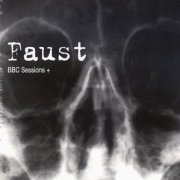
BBC Sessions + is a stand-alone issue of the previously-unreleased disc from 2000's The Wümme Years box set, gaining a couple of tracks in the process. In actuality, next to none (if any) of it was actually recorded at the Beeb, as there were apparently power supply issues with their home-built equipment, so, although its contents were prepared for BBC broadcast, they were recorded at the band's own live-in studio back home in Wümme. Faust are probably THE krautrock band to sort out the men from the boys; lengthy, melody-free drones mixed with 'motorik' rhythms, sound effects and tape collages and that's just in the first 'song', a twenty-two-minute medley of three earlier pieces, although for the uninitiated, it's hard to tell. When Virgin released The Faust Tapes for 49p as a loss-leader in 1973, purchasers' reactions apparently ranged from adulation, to 'using it as a frisbee', as I once read and, going by this album, it's possible to see both points of view; the music simultaneously fascinates and irritates and since every track is completely different to every other, consistency goes out of the window. As, indeed, did many copies of the album.
I'd always assumed that a band as cutting-edge as Faust would be unlikely to use a Mellotron and had as good as dismissed the possibility, but We Are The Hallo Men, as promised, features some atonal, screechy Mellotron strings, possibly played by organist (what, they had something as normal as an organist?) Hans-Joachim Irmler, although both Gunter Wüsthoff and Rudolf Sosna are candidates, too. It seems highly unlikely that they owned one, so maybe it's one of the album's occasional actual BBC recordings?
If the spectre of krautrock refuses to loom over you, chances are you're not going to warm to this album, or indeed, anything by the band. If, however, playful experimentation and drug-fuelled lunacy are your stock in trade, you probably own Faust's essential releases already, but you may find the hard-to-find performances here worth adding to your collection, for those times when nothing but a total absence of rules will do. Incidentally, it seems that We Are The Hallo Men is actually previously-released, on 1986's Return of a Legend: Munic and Elsewhere, although I'm not entirely certain it's the same recording. While it's, er, 'interesting' on the Mellotron front, it's hardly essential, though; die-hards only, I think. Also incidentally, if you think this review's slightly disjointed, while I probably could tidy it up, it seems strangely fitting to leave it this way.
 |
Suicidio (1978, 39.06) **½/T |
|
| Intro Suicidio Godi Bastardi Piccolo Lord Eccolo Qua Il Mio Sesso C'è un Posto Caldo |
Innocenza Benvenuti Tra i Rifiuti |
|
Current availability:
Mellotron used:
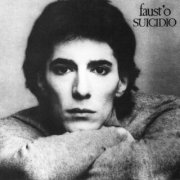
Fausto "Faust'o" Rossi is an Italian singer-songwriter, still active today, whose debut, 1978's Suicidio, is pretty much of its time in a late '70s pop/rock kind of way; think: 'lots of Supertramp-style piano work' and you won't be too far off. Better tracks include the rocky Bastardi, Piccolo Lord and Innocenza, although I suspect the album (like so many similar) is more about the lyrics than the music, making it a no-show for non-Italian speakers.
One F. (Franco) Graniero plays Mellotron choirs on Innocenza, with a reasonably full-on part, although it's hardly worth buying the album on that account. One for fans of the less mainstream end of Italian pop, I think.
 |
Blacklight (2009, 37.05) ****/TTTT½ |
|
| Skeletons of Penn Station Same Dragon Shaped Cloud Drink/Sleep/Forget JadeFalls Hope Springs Eternal Le Jardin des Plantes Joyless Cloudly The Wolf at the Door |
Hop on it Montauk Highway Rain |
|
Current availability:
Mellotron used:
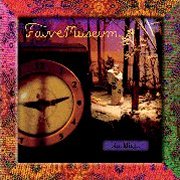
FauveMuseum were Cathedral (US version)'s Tom Doncourt's one-off solo project, aided and abetted by bassist Chuck Bernklau and vocalist Penelope Thomas, with original Cathedral guitarist Rudy Perrone on one track. Blacklight sits somewhere in the middle of the common ground between progressive and new age, I'd say; Hope Springs Eternal even sounds slightly like The Moody Blues. Possibly its most interesting feature is its ability to juxtapose the laid-back (Skeletons Of Penn Station, Same Dragon Shaped Cloud) with the unsettling (Le Jardin Des Plantes, Montauk Highway Rain) and get away with it, but then, Doncourt had no multinational record company breathing down his neck and could do whatever the hell he liked. And did.
Tom used three different M400 tape frames on the album, giving him a wider sound palette than many players, although five of his nine sounds are in the strings line. Incidentally, the mixed and boys' choirs on Hop On It and the MkII rhythms on Joyless Cloudly are sampled. Anyway, we get flutes and strings on Skeletons Of Penn Station, M300 strings on Same Dragon Shaped Cloud, strings and Chamberlin oboe (obviously on Mellotron tapes) on Drink/Sleep/Forget, regular strings and cellos on JadeFalls... I think you get the idea. Basically, the album's stuffed full of Mellotron (and Chamberlin sounds), with particularly heavy cello, M300 strings and oboe use on Joyless Cloudly, the latter quite distinct from the Mellotron one.
See: Tom Doncourt | Cathedral
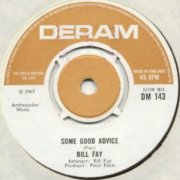 |
7" (1967) ****/TT Some Good Advice Screams in the Ears |
 |
Who is the Sender? (2015, 54.36) ****/T½ |
|
| The Geese Are Flying Westward War Machine How Little Underneath the Sun Something Else Ahead Order of the Day Who is the Sender? The Freedom to Read |
Bring it on Lord A Page Incomplete A Frail and Broken One World of Life I Hear You Calling (studio reunion) |
|
Current availability:
Mellotrons used:
Some Good Advice b/w Screams In The Ears was legendary singer-songwriter Bill Fay's (1943-2025) debut single, two superb slices of kitchen-sink drama in musical form; why was this not a hit? An unknown sessioneer plays full-on MkII Mellotron flutes on the 'A'; while there are parts on the flip that could be Mellotronic, my ears say no.
I've précised Fay's remarkable rehabilitation in my review of his comeback album, 2012's Life is People. In short, after two albums at the beginning of the '70s, despite writing and demoing songs in the interim, it was forty years before his next release. He's followed up with 2015's Who is the Sender?, another stately, hymnal record of slow, heartfelt songs, many informed by Fay's faith, amongst the best being Underneath The Sun, the fiddle-led title track, Bring It On Lord and A Page Incomplete, but you'd be hard-pushed to find any low points. Although I've dismissed Mikey Rowe's 'Mellotron' work on Life is People, I've found it a great deal harder to do the same this time round. Better samples? A real Mellotron? Anyway, we get chordal flutes on War Machine, strings on How Little (with some fairly authentic wobble near the end), background strings on Underneath The Sun, upfront strings on Bring It On Lord, flutes on A Page Incomplete and strings at the end of World Of Life. Real? Perhaps I'll find out sometime. Either way, a rather wonderful album that I hope to get to know rather better.
See: Samples etc.
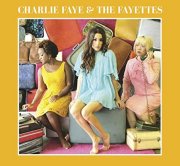 |
Charlie Faye & the Fayettes (2016, 33.23) ***/TT½ |
|
| Green Light Loving Names Sweet Little Messages Carelessly Heart Eastside Coming Round the Bend |
One More Chance See You Again Delayed Reaction It's All Happening |
|
Current availability:
Mellotron used:
Charlie Faye & the Fayettes (Faye, BettySoo and Akina Adderley) are often referred to as a 'modern-day '60s girl group', with good reason, going by their eponymous 2016 debut, sounding like a low-key Shirelles/Ronettes/Shangri-Las, albeit without Spector's production excesses. Or guns. Top tracks? opener Green Light (go on, front-load it!), Loving Names' Spaghetti Western feel and the brassy Eastside, maybe.
Roger Joseph Manning, Jr. plays real-sounding Mellotron, with full-on strings on Green Light and One More Chance, less upfront ones on Sweet Little Messages and a flute line doubling harpsichord (?) on Carelessly. I'm not going to pretend this blew me away, but it does what it does with aplomb, which is more than I can say for a high percentage of the albums on this site.
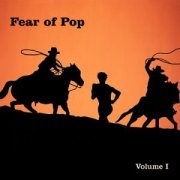 |
Volume 1 (1998, 41.37) ***½/TT |
|
| Fear of Pop Kops Slow Jam '98 Blink In Love Interlude Avery M. Powers Memorial Beltway I Paid My Money |
Rubber Sled Root to This Still in Love |
|
Current availability:
Chamberlin used:
It's rather difficult to know exactly how to list this album; is it by Fear of Pop? Is Fear of Pop the title? And who's behind it all, anyway? It turns out it's a Ben Folds side-project, presumably recorded while Folds took a breather from his cheesily mainstream Ben Folds Five. Thankfully, Volume 1 (as we shall presume it's actually titled) is an awfully long way from Folds' day job, being an eclectic mix of almost every style going, with an excellent police show/blaxploitation feel to Kops, a mixture of Appalachian folk and Theremin on Avery M. Powers Memorial Beltway and ridiculous spoken word pieces In Love and Still In Love, the latter featuring the inimitable (and almost unrecognisable) William Shatner. All in all, every track is different to every other, making for a most uncommercial work, although a far more artistically satisfying one than Mr. Folds usually produces.
John Mark Painter is credited with Chamberlin on Avery M. Powers Memorial Beltway, presumably providing the track's distant strings, but given that it (or is it a Mellotron?) can be heard on another four tracks, I think we have to assume it's Folds, who's credited with 'all instruments', aside from a list of exceptions. Anyway, we get flutes and occasional strings on Kops, little string stabs and some great cello/double bass work on Slow Jam '98, distant strings on In Love and what sounds like Chamby female voices on the exceedingly brief Interlude, making a nice change from the usual suspects.
See: Ben Folds
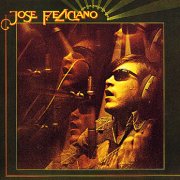 |
And the Feeling's Good (1974, 33.58) **½/½ |
|
| Hard Times in El Barrio I've Got to Convince Myself You're No Good Differently Virgo Golden Lady Stay With Me Chico and the Man (Main Theme) |
And the Feeling's Good Essence of Your Love |
|
Current availability:
Mellotron used:
Legendary blind singer/songwriter/guitarist José (Montserrate) Feliciano (García) is actually Puerto Rican, although the odd political situation there seems to make him technically American. 1974's And the Feeling's Good is something like his eleventh album, covering a surprisingly amount of ground for an artist often ghettoised into the 'Latin' field, although much of the record does indeed have that influence. Highlights include his version of You're No Good (later improbably covered by Van Halen, would'ja believe) and the hard rock of Virgo, although too many soundalike ballads have cropped the album a half star.
Feliciano plays Mellotron himself, although the only thing that even might be it is the flute line in closer Essence Of Your Love, all the album's strings sounding decidedly real. Given that this is now finally available again (well done, Wounded Bird), Feliciano fans can once again get hold of a highly-rated album, even if it didn't particularly appeal to your truly. Next to no Mellotron, though, making you wonder why he bothered.